
Welcome to Lesson 3 of the Satya Traditional Natal Astrology Course. In this lesson, you will study the twelve zodiac signs and learn how they shape the expression of a planet in a birth chart.
You will begin with the main classifications of the signs. First, you will learn the three modes: cardinal, fixed, and mutable. These describe how each sign acts within its season. Cardinal signs begin a season, fixed signs stabilize it, and mutable signs bring transition.
Next, you will learn the gender of the signs. The signs alternate between masculine and feminine, beginning with Aries as masculine. This classification helps you understand whether a sign is more outward and active or more inward and receptive.
You will also study the four triplicities, or elemental groups:
- Fire: Aries, Leo, Sagittarius
- Earth: Taurus, Virgo, Capricorn
- Air: Gemini, Libra, Aquarius
- Water: Cancer, Scorpio, Pisces
These classifications give you a clear starting point for understanding each sign. For example, Libra is cardinal, masculine, and airy. This shows a sign that initiates, relates outwardly, and works through ideas, balance, and social exchange.
In the second part of the lesson, you will study each sign in more detail using traditional material drawn mainly from Vettius Valens and William Lilly. As you read, remember that some traditional descriptions may sound severe, especially for certain signs. Read them carefully, but also look for the core meaning behind the language.
You will also find additional reading links from Deborah Houlding and Geoffrey Ballinger. These readings will help you compare traditional descriptions and build a richer vocabulary for each sign.
As you study, try to create a short keyword list for every sign. This will help you remember the signs and use them more confidently in chart interpretation.
This lesson also introduces two additional example charts that we will use throughout the course.
Finally, you will learn how to delineate a planet in a sign. A planet shows the main function or actor. The sign shows its style, manner, and approach. You can think of the planet as a person and the sign as the clothing or manner of expression. The planet’s basic nature does not change, but its way of acting changes according to the sign.
For example, Venus signifies love, pleasure, beauty, and social connection. In Gemini, Venus expresses these topics through wit, curiosity, conversation, and mental variety. This is the basic method you will use when interpreting planets in signs.
By the end of this lesson, you should be able to:
- classify each sign by mode, gender, and triplicity
- describe the basic nature of each sign using clear keywords
- explain how a sign modifies the expression of a planet
- distinguish between the planet’s core meaning and the sign’s style of expression
- write a simple delineation of a planet in a sign
- apply sign classifications to example charts with accuracy
This lesson gives you the language of the signs. Once you understand how signs work, you will be able to describe planetary expression with more precision and confidence.
1. Classification of the Signs
1.1 The Four Seasons and the Three Modes
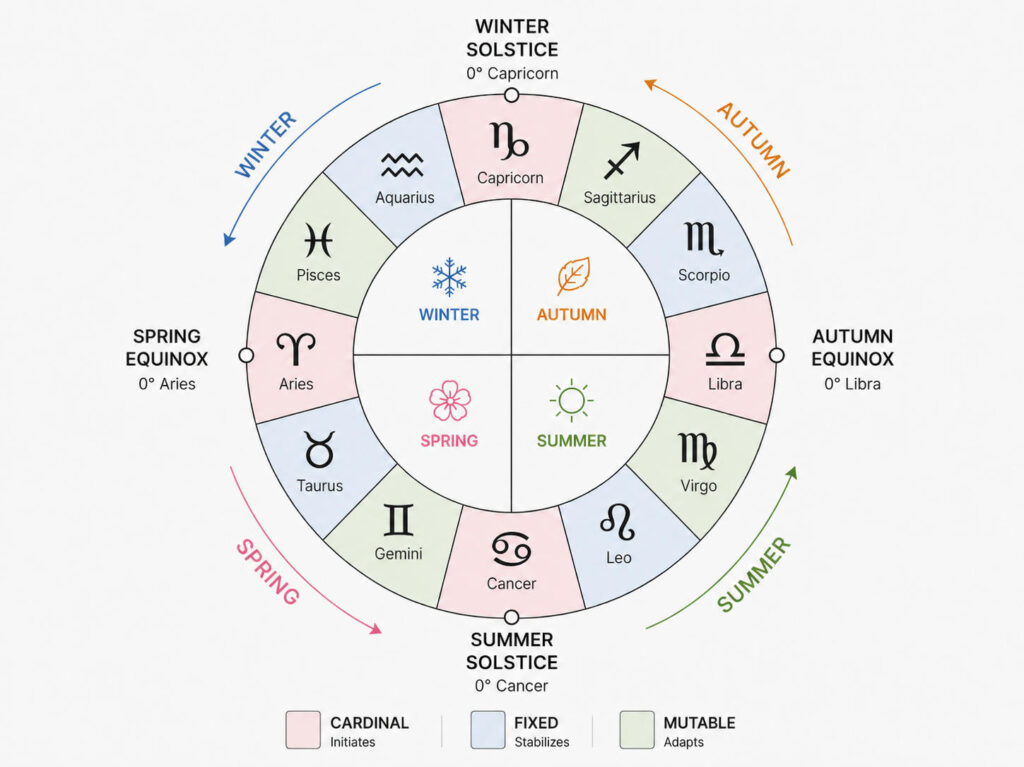
The Tropical Zodiac is based on the yearly cycle of the Sun. As the Sun moves through the zodiac, it marks the four seasons: spring, summer, autumn, and winter.
Traditional astrologers understood each season through its elemental qualities:
- Spring is hot and moist
- Summer is hot and dry
- Autumn is cold and dry
- Winter is cold and moist
Ptolemy explains that Aries is treated as the beginning of the zodiac because it begins at the spring equinox. At this point, day and night are equal, and the Sun begins to increase in strength as it moves northward.
Each season contains three signs. These three signs show the beginning, middle, and end of the season. This gives us the three modes:
- Cardinal or movable signs
- Fixed or solid signs
- Mutable or common signs
These modes describe how a sign acts. They are one of the first tools you will use when interpreting planets in signs.
1.2 Cardinal or Movable Signs
The cardinal signs are:
- Aries
- Cancer
- Libra
- Capricorn
These signs begin the four seasons.
- Aries begins spring
- Cancer begins summer
- Libra begins autumn
- Capricorn begins winter
They are called cardinal because they mark the turning points of the year. They are also called movable signs because they bring change and begin a new seasonal phase.
Aries and Libra are also called equinoctial signs. When the Sun enters these signs, day and night are equal.
Cancer and Capricorn are called solstitial signs. When the Sun enters these signs, it reaches a turning point in its northward or southward motion.
Cardinal signs show movement, change, initiative, and new beginnings. A planet in a cardinal sign tends to act quickly and push matters forward. It wants to begin, move, and set things in motion.
1.3 Fixed or Solid Signs
The fixed signs are:
- Taurus
- Leo
- Scorpio
- Aquarius
These signs follow the cardinal signs. By the time the Sun enters a fixed sign, the season has become firmly established.
- Taurus stabilizes spring
- Leo stabilizes summer
- Scorpio stabilizes autumn
- Aquarius stabilizes winter
They are called fixed or solid because they preserve and strengthen the quality of the season.
Fixed signs show stability, firmness, persistence, and resistance to change. A planet in a fixed sign tends to continue what has already begun. It may be steady, loyal, and enduring, but it may also be slow to adjust.
1.4 Mutable or Common Signs
The mutable signs are:
- Gemini
- Virgo
- Sagittarius
- Pisces
These signs come at the end of each season. They prepare the way for the next season.
- Gemini completes spring and prepares for summer
- Virgo completes summer and prepares for autumn
- Sagittarius completes autumn and prepares for winter
- Pisces completes winter and prepares for spring
They are called mutable because they show change and adjustment. Traditional authors also call them common signs because they share the nature of the season that is ending and the season that is about to begin. They are also called double-bodied signs because their symbols often show dual or mixed forms.
Mutable signs show flexibility, adaptation, transition, and repetition. A planet in a mutable sign tends to adjust, respond, and shift according to circumstances. It may be versatile and responsive, but it may also be inconsistent or divided.
How the Modes Help Interpretation
The mode of a sign helps you understand how a planet acts.
- A planet in a cardinal sign acts by starting, moving, and changing.
- A planet in a fixed sign acts by holding, preserving, and continuing.
- A planet in a mutable sign acts by adapting, shifting, and transitioning.
Sahl bin Bishr gives a simple rule: movable signs show quick changes, fixed signs show firmness and stability, and common signs show loosening, repetition, and matters that develop in more than one stage.
William Lilly gives a similar practical judgment. A strong emphasis on movable signs can show instability or quick change. A strong emphasis on fixed signs can show firmness and resolve. A strong emphasis on common signs can show a mixed condition, neither fully fixed nor fully changeable.
Key Idea
The modes show the rhythm of the signs within the seasons.
- Cardinal signs begin.
- Fixed signs stabilize.
- Mutable signs transition.
When you read a planet in a sign, first ask: Is this planet acting in a cardinal, fixed, or mutable way?
1.5 Masculine and Feminine Signs
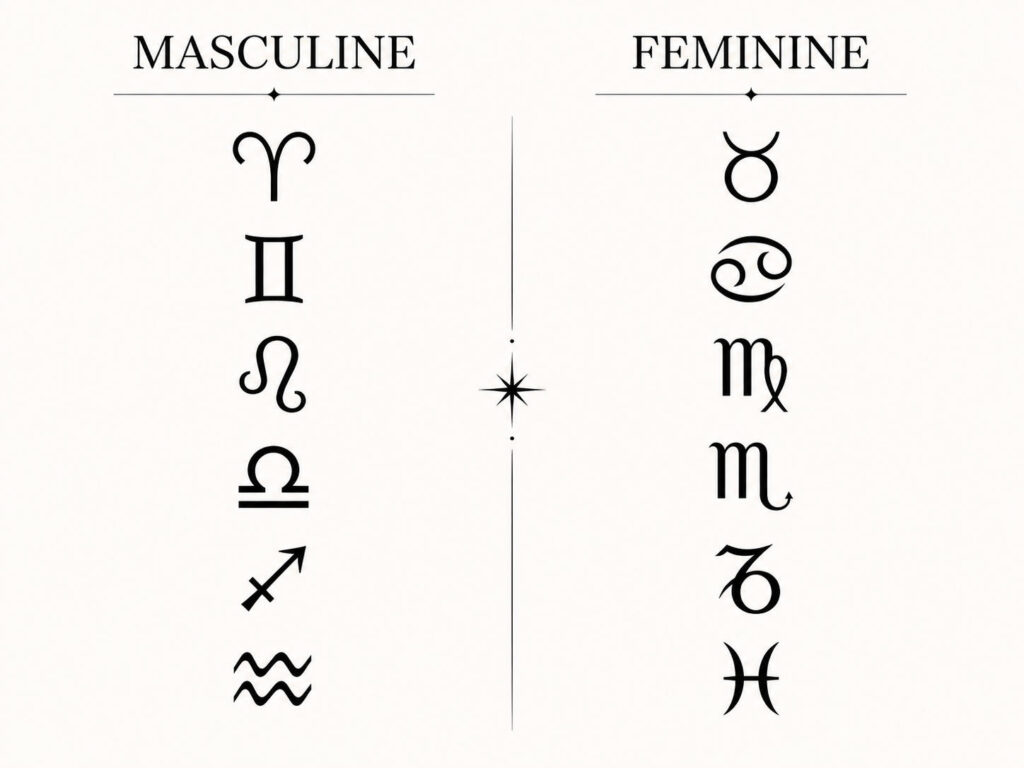
Traditional astrology also divides the twelve signs into masculine and feminine signs. This is another basic classification that helps you understand how a sign expresses itself.
The signs alternate between masculine and feminine, beginning with Aries as masculine.
Masculine Signs
The masculine signs are:
- Aries
- Gemini
- Leo
- Libra
- Sagittarius
- Aquarius
These signs are also called diurnal signs. They are more active, outward, expressive, and direct. They tend to move toward the world and act upon it.
A planet in a masculine sign may express itself in a more visible, active, or outward manner.
Feminine Signs
The feminine signs are:
- Taurus
- Cancer
- Virgo
- Scorpio
- Capricorn
- Pisces
These signs are also called nocturnal signs. They are more receptive, inward, reserved, and reflective. They tend to respond, contain, preserve, or work more quietly.
A planet in a feminine sign may express itself in a more inward, careful, or receptive manner.
Why the Signs Alternate
Ptolemy explains that the signs alternate between masculine and feminine because day and night also alternate. Since Aries is taken as the beginning of the zodiac, it is assigned to the masculine and diurnal nature. Taurus then becomes feminine and nocturnal. The pattern continues through the rest of the zodiac.
This gives a simple sequence:
- Aries: masculine
- Taurus: feminine
- Gemini: masculine
- Cancer: feminine
- Leo: masculine
- Virgo: feminine
- Libra: masculine
- Scorpio: feminine
- Sagittarius: masculine
- Capricorn: feminine
- Aquarius: masculine
- Pisces: feminine
How this Helps Interpretation
This classification gives you another way to describe how a planet acts in a sign.
William Lilly gives a practical rule. A masculine planet in a masculine sign has its active nature supported. A feminine planet in a feminine sign also has its natural expression supported. When the planet and sign differ in gender, the expression may feel less direct or less natural.
For example:
- Mars in Aries places a masculine planet in a masculine sign. This can make Mars more direct, forceful, and openly active.
- Venus in Taurus places a feminine planet in a feminine sign. This can make Venus more receptive, sensual, stable, and naturally expressive.
- Mars in Cancer places a masculine planet in a feminine sign. Mars may still act, but its action may become more indirect, protective, or emotionally driven.
- Venus in Gemini places a feminine planet in a masculine sign. Venus may express affection more outwardly through speech, wit, and social exchange.
This does not decide whether a planet is strong or weak by itself. It is only one factor. You will combine it with mode, triplicity, dignity, sect, house placement, and aspects.
Key Idea
Masculine signs express outwardly.
Feminine signs respond inwardly.
When you read a planet in a sign, ask: Is the sign making the planet more outward and active, or more inward and receptive?
1.6 The Four Triplicities
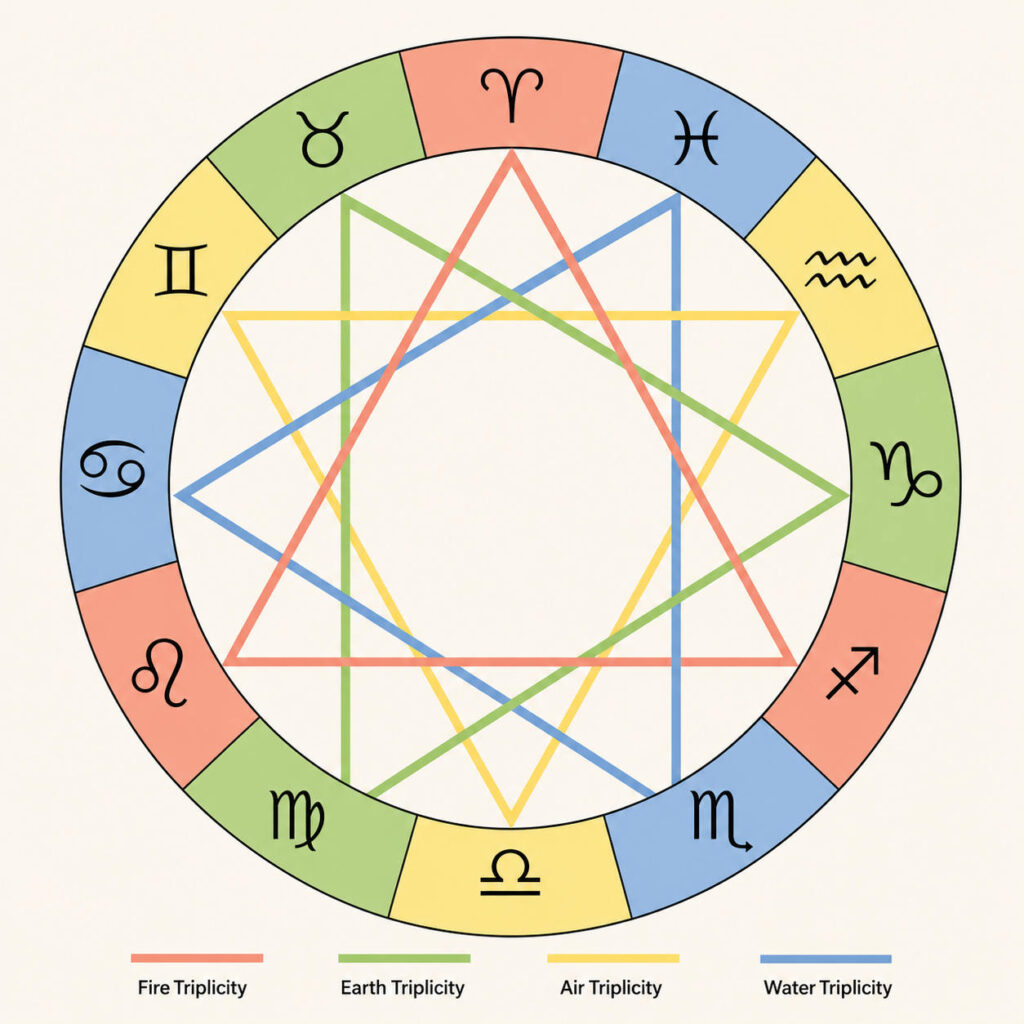
The twelve signs are also divided by element. Each element contains three signs. This group of three signs is called a triplicity.
There are four triplicities:
- Fire: Aries, Leo, Sagittarius
- Earth: Taurus, Virgo, Capricorn
- Air: Gemini, Libra, Aquarius
- Water: Cancer, Scorpio, Pisces
Triplicity helps you understand the basic nature of a sign. It shows the sign’s elemental quality and gives you another way to describe how a planet acts when placed in that sign.
Fire Triplicity
The fire signs are:
- Aries
- Leo
- Sagittarius
Fire is hot and dry. It is linked with the choleric temperament.
Fire signs are active, bold, expressive, and forceful. They tend to move outward with confidence and enthusiasm. A planet in a fire sign may act with speed, courage, heat, and a desire to make an impact.
Earth Triplicity
The earth signs are:
- Taurus
- Virgo
- Capricorn
Earth is cold and dry. It is linked with the melancholic temperament.
Earth signs are practical, steady, organized, and concerned with material results. They tend to focus on what is useful, concrete, and lasting. A planet in an earth sign may act with caution, patience, realism, and concern for structure.
Air Triplicity
The air signs are:
- Gemini
- Libra
- Aquarius
Air is hot and moist. It is linked with the sanguine temperament.
Air signs are social, thoughtful, verbal, and idea-oriented. They tend to move through speech, learning, exchange, and connection. A planet in an air sign may act through communication, reasoning, comparison, and social interaction.
Water Triplicity
The water signs are:
- Cancer
- Scorpio
- Pisces
Water is cold and moist. It is linked with the phlegmatic temperament.
Water signs are receptive, sensitive, emotional, and inward. They tend to respond through feeling, memory, attachment, and intuition. A planet in a water sign may act with care, caution, depth, and emotional awareness.
How Triplicity Helps Interpretation
Triplicity tells you the element through which a planet expresses itself.
- A planet in a fire sign acts with heat, drive, and boldness.
- A planet in an earth sign acts with caution, practicality, and persistence.
- A planet in an air sign acts through thought, speech, and connection.
- A planet in a water sign acts through feeling, memory, and response.
For example, Mercury in an air sign may express itself through speech, study, and argument. Mercury in an earth sign may express itself through practical skill, planning, and useful work. The planet remains Mercury, but the sign changes its style of expression.
Key Idea
Triplicity shows the elemental nature of a sign.
- Fire acts.
- Earth builds.
- Air connects.
- Water responds.
When you read a planet in a sign, ask: What element is shaping the planet’s expression?
Here is the rewritten subsection in the lesson style:
1.7 Additional Classifications
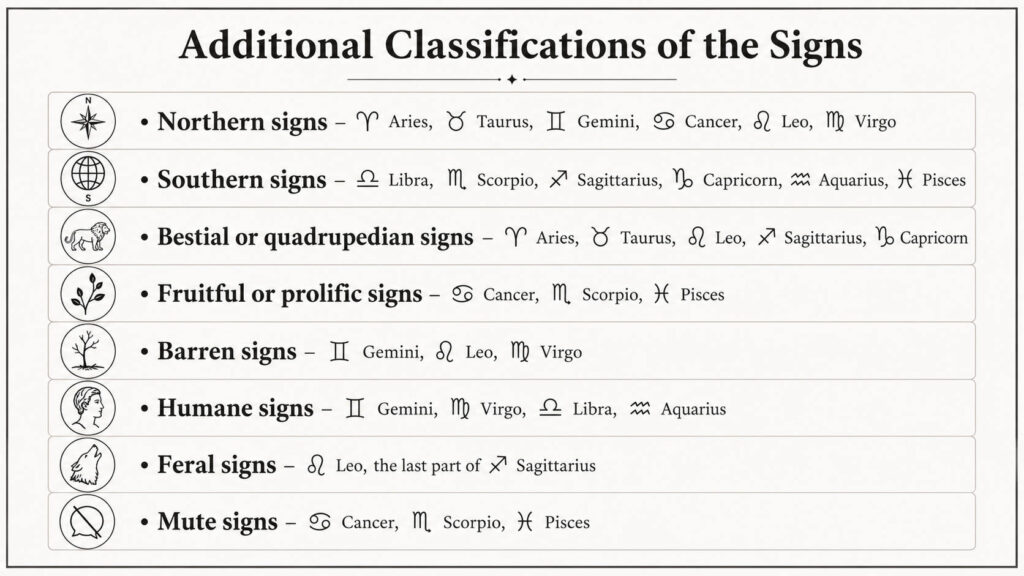
Traditional astrologers also classified the signs in several other ways. These classifications are more specific than mode, gender, and triplicity. You do not need to master all of them at once, but you should become familiar with them.
They can help you describe a sign more precisely, especially when judging temperament, speech, fertility, behavior, and physical symbolism.
Northern and Southern Signs
The zodiac is divided into two halves.
The northern signs are:
- Aries
- Taurus
- Gemini
- Cancer
- Leo
- Virgo
These signs are north of the celestial equator in the Sun’s yearly path.
The southern signs are:
- Libra
- Scorpio
- Sagittarius
- Capricorn
- Aquarius
- Pisces
These signs are south of the celestial equator in the Sun’s yearly path.
This classification comes from the Sun’s movement north and south during the year.
Bestial or Quadrupedal Signs
The bestial or quadrupedal signs are signs represented by four-footed creatures.
They are:
- Aries
- Taurus
- Leo
- Sagittarius
- Capricorn
These signs can show a more bodily, instinctive, physical, or animal-like expression. William Lilly says that when the Ascendant or its ruler is in one of these signs, the person may show something of the nature of the creature represented by that sign.
For example:
- Aries may show rashness or boldness.
- Taurus may show steadiness and firmness.
- Leo may show pride, strength, and command.
Use this classification carefully. It is a symbolic tool, not a complete judgment by itself.
Fruitful Signs
The fruitful or prolific signs are:
- Cancer
- Scorpio
- Pisces
These are water signs. They are linked with fertility, growth, increase, and the production of life.
In traditional practice, fruitful signs are often considered when judging topics such as children, pregnancy, growth, and abundance. A planet or house ruler placed in a fruitful sign may support increase, especially if the planet is also strong and well placed.
Barren Signs
The barren signs are:
- Gemini
- Leo
- Virgo
These signs are traditionally linked with dryness or lack of fertility. They may show delay, limitation, or fewer results in matters of growth and reproduction.
In questions about children, for example, a barren sign on the Ascendant or 5th house may suggest difficulty or fewer children, especially if other testimonies agree.
Do not judge from this factor alone. Always combine it with the ruler of the house, the Moon, benefic or malefic influence, and the overall condition of the chart.
Humane Signs
The humane signs are:
- Gemini
- Virgo
- Libra
- Aquarius
These signs are represented by human figures or are linked with human reason and social conduct. They may show civility, speech, learning, manners, and social skill.
When the Ascendant or its ruler is in a humane sign, traditional authors often judge the person to be more approachable, reasonable, courteous, or fit for conversation.
Feral Signs
The feral signs are:
- Leo
- the last part of Sagittarius
These signs are linked with wildness, untamed behavior, or a less restrained nature. They may show a rougher or more forceful expression, especially when joined with malefics or when the Ascendant ruler is poorly placed.
Use this classification only as one part of a larger judgment.
Mute Signs
The mute signs are:
- Cancer
- Scorpio
- Pisces
These signs are connected with creatures that do not speak in the ordinary human way. They are therefore linked with silence, difficulty in speech, hidden expression, or indirect communication.
Lilly notes that this may be especially relevant if Mercury is placed in one of these signs and afflicted by Saturn. In such cases, the condition of speech, learning, or expression may need closer examination.
How to Use These Classifications
These classifications add detail to your reading. They should not be used alone. They work best when they confirm other factors in the chart.
For example:
- Fruitful signs may support growth or fertility.
- Barren signs may limit increase.
- Humane signs may support speech and civility.
- Mute signs may reduce or alter expression.
- Bestial signs may make the expression more physical or instinctive.
- Feral signs may show wildness or lack of restraint.
Key Idea
Additional classifications help you refine your judgment.
They answer questions such as:
- Is the sign more fertile or barren?
- Is it more human or animal-like?
- Is it more vocal or silent?
- Is it more civil or wild?
When you use these classifications, ask: Does this sign classification confirm what the rest of the chart is already showing?
2. The Twelve Signs
Aries

Aries is the first sign of the zodiac. It begins at the spring equinox, when the Sun starts to gain strength in the Northern Hemisphere. For this reason, Aries carries the force of beginning, movement, and fresh action.
Aries is:
- Masculine
- Diurnal
- Cardinal
- Fire
- Hot and dry
- Choleric
- The diurnal house of Mars
Because Aries is a cardinal fire sign ruled by Mars, it is bold, active, and forceful. It wants to begin, act, push forward, and overcome resistance.
Core Meaning of Aries
Aries signifies action, courage, speed, and conflict. It is a sign that moves directly toward its aim.
Common Aries traits include:
- initiative
- courage
- boldness
- speed
- competition
- restlessness
- direct action
- a fighting spirit
Aries can be brave and decisive. It can also be rash, impatient, aggressive, or lacking in tact. Because it is ruled by Mars, Aries often acts first and reflects later.
Planets in Aries
A planet in Aries tends to act quickly and directly. It becomes more forceful, active, and eager to begin.
For example:
- The Sun in Aries may show confidence, leadership, and the desire for honor.
- Mercury in Aries may speak directly, argue quickly, and think in a fast, sharp way.
- Venus in Aries may approach love boldly, passionately, and sometimes impatiently.
- Mars in Aries is strong in its own sign and can act with courage, speed, and force.
Not every planet is comfortable in Aries. A planet whose nature needs patience, softness, or restraint may struggle in this sign.
For example, Saturn in Aries can show conflict between Saturn’s slow, cautious nature and Aries’ fast, aggressive nature. This may bring blocked action, frustration, or force mixed with delay.
Aries and the Body
In traditional astrology, Aries rules the head and face.
Diseases and conditions associated with Aries may include:
- headaches
- migraines
- toothache
- injuries to the face
- pimples or eruptions on the face
- apoplexy
- baldness
Because Aries is ruled by Mars and is hot and dry, it can show conditions linked with heat, inflammation, sharp pain, or sudden attacks.
Aries and Places
William Lilly connects Aries with places related to sheep, small cattle, heat, and rough ground.
Aries may signify:
- fields where sheep or small cattle feed
- sandy or hilly ground
- newly plowed land
- places where bricks or lime are burned
- stables for small animals
- ceilings, roofs, or upper parts of houses
- remote or unsafe places
These places reflect the sign’s hot, dry, martial, and bestial nature.
Traditional Description
Traditional authors describe Aries as active, fiery, bold, and changeable. Vettius Valens links Aries with public action, rank, authority, bold thought, restlessness, and the urge to govern. William Lilly describes Aries as movable, cardinal, equinoctial, fiery, hot and dry, choleric, bestial, and violent.
These descriptions show the same basic idea: Aries is a sign of action and force. It begins things, confronts obstacles, and moves with speed.
Key Idea
Aries is the sign of beginning, courage, speed, and direct action.
When you read a planet in Aries, ask:
How does this planet act when it is pushed to move quickly, boldly, and with force?
Further Reading
- Aries the Ram by Deborah Houlding on Skyscript
- Aries: The Ram by Geoffrey Ballinger on Satya Astrology
Taurus

Taurus is the second sign of the zodiac. It comes after Aries and stabilizes the spring season. If Aries begins, Taurus preserves and sustains.
Taurus is:
- Feminine
- Nocturnal
- Fixed
- Earth
- Cold and dry
- Melancholic
- The nocturnal house of Venus
Because Taurus is a fixed earth sign ruled by Venus, it is steady, practical, and sensual. It is concerned with stability, possession, pleasure, and the natural world.
Core Meaning of Taurus
Taurus signifies firmness, endurance, material security, and bodily enjoyment. It is a sign that values what is stable, useful, and lasting.
Common Taurus traits include:
- patience
- steadiness
- practicality
- calmness
- loyalty
- tenacity
- pleasure in music and beauty
- attachment to comfort and possessions
Taurus can be reliable and productive. It can also be stubborn, slow to change, and too attached to ease or security. Because it is ruled by Venus, Taurus is often linked with music, beauty, pleasure, nature, food, finance, and the enjoyment of the senses.
Planets in Taurus
A planet in Taurus tends to act slowly, steadily, and cautiously. It does not rush. It wants security, consistency, and clear material results.
For example:
- The Moon in Taurus is exalted and may show strong bodily needs, stability, and a capacity for nurture.
- Venus in Taurus is in her own sign and can express pleasure, beauty, affection, and sensual enjoyment with ease.
- Mercury in Taurus may think slowly but carefully, with a practical and grounded mind.
- Mars in Taurus may struggle because Mars wants fast action, while Taurus resists quick change. This can show contained anger, delayed action, or force that builds slowly over time.
Taurus gives planets a slower and more enduring style. It helps what needs patience, preservation, and material stability. It may frustrate planets that need speed or immediate movement.
Taurus and the Body
In traditional astrology, Taurus rules the neck and throat.
Diseases and conditions associated with Taurus may include:
- sore throats
- swelling in the throat
- throat infections
- problems with the voice
- neck stiffness
- thyroid-related concerns
Because Taurus is cold and dry, and ruled by Venus, its conditions may involve retention, swelling, stagnation, or problems in the throat and neck area.
Taurus and Places
William Lilly connects Taurus with places related to cattle, farming, food, and low or enclosed spaces.
Taurus may signify:
- stables
- pastures
- feeding grounds
- fields for grain or corn
- plain ground
- low houses
- cellars
- low rooms
- places where farm tools or animal equipment are stored
These places reflect Taurus’ earthy, fixed, rural, and domestic nature.
Traditional Description
Traditional authors describe Taurus as earthy, fixed, feminine, nocturnal, and bestial. Vettius Valens links Taurus with farming, estates, possessions, order, labor, music, generosity, and keeping things. William Lilly describes Taurus as cold, dry, melancholy, fixed, and the nocturnal house of Venus.
These descriptions show the same basic idea: Taurus is a sign of stability, possession, labor, pleasure, and preservation. It works slowly, but it can hold and sustain what it builds.
Key Idea
Taurus is the sign of stability, possession, patience, and sensual enjoyment.
When you read a planet in Taurus, ask:
How does this planet act when it is made slower, steadier, more practical, and more concerned with security?
Further Reading
- Taurus the Bull by Deborah Houlding on Skyscript
- Taurus: The Bull by Geoffrey Ballinger on Satya Astrology
Gemini

Gemini is the third sign of the zodiac. It comes after Taurus and completes the spring season. If Taurus preserves, Gemini distributes, connects, and prepares the way for change.
Gemini is:
- Masculine
- Diurnal
- Mutable
- Air
- Hot and moist
- Sanguine
- The diurnal house of Mercury
Because Gemini is a mutable air sign ruled by Mercury, it is quick, verbal, curious, and adaptable. It is concerned with learning, speech, exchange, movement, and variety.
Core Meaning of Gemini
Gemini signifies communication, intelligence, movement, and versatility. It is a sign that connects one thing to another through words, ideas, and exchange.
Common Gemini traits include:
- curiosity
- intelligence
- sociability
- adaptability
- quick speech
- love of learning
- variety of interests
- mental flexibility
Gemini can be clever, lively, and skillful with words. It can also be restless, scattered, inconsistent, or too changeable. Because it is ruled by Mercury, Gemini is strongly linked with writing, speaking, teaching, trade, translation, calculation, and the exchange of information.
Planets in Gemini
A planet in Gemini tends to act quickly, lightly, and mentally. It becomes more communicative, versatile, and responsive to different ideas or situations.
For example:
- The Moon in Gemini may show a changeable mind, curiosity, and a strong need for conversation or movement.
- Mercury in Gemini is in its own sign and can express learning, speech, wit, and interpretation with ease.
- Venus in Gemini may approach love through conversation, humor, curiosity, and social variety.
- Mars in Gemini may act through words, debate, argument, speed, and sharp mental action.
Gemini gives planets a lighter and more flexible style. It helps what needs thought, language, and adaptation. It may be difficult for planets that need steadiness, depth, or long concentration.
Gemini and the Body
In traditional astrology, Gemini rules the arms, hands, shoulders, and lungs.
Diseases and conditions associated with Gemini may include:
- problems with the arms or hands
- shoulder pain
- breathing problems
- lung weakness
- windiness in the body
- disturbed thoughts or nervous agitation
When Mars or Saturn afflicts Gemini, traditional authors may judge injuries, cuts, fractures, stiffness, or weakness in the arms, hands, or shoulders.
Gemini and Places
William Lilly connects Gemini with places of movement, storage, learning, play, and height.
Gemini may signify:
- halls
- rooms with walls or paneling
- places where games are played
- barns
- storehouses
- chests and coffers
- hills and mountains
- high places
These places reflect Gemini’s airy, mutable, and Mercurial nature.
Traditional Description
Traditional authors describe Gemini as masculine, diurnal, mutable, airy, human, and double-bodied. Vettius Valens links Gemini with scholars, teachers, poets, translators, merchants, judges, sensible people, and seekers of hidden knowledge. William Lilly describes Gemini as hot, moist, sanguine, common, double-bodied, humane, and the diurnal house of Mercury.
These descriptions show the same basic idea: Gemini is a sign of speech, learning, exchange, skill, and adaptability. It moves through words and ideas.
Key Idea
Gemini is the sign of communication, curiosity, movement, and mental variety.
When you read a planet in Gemini, ask:
How does this planet act when it is made quicker, more verbal, more curious, and more adaptable?
Further Reading
- Gemini the Twins by Deborah Houlding on Skyscript
- Gemini: The Twins by Geoffrey Ballinger on Satya Astrology
Cancer
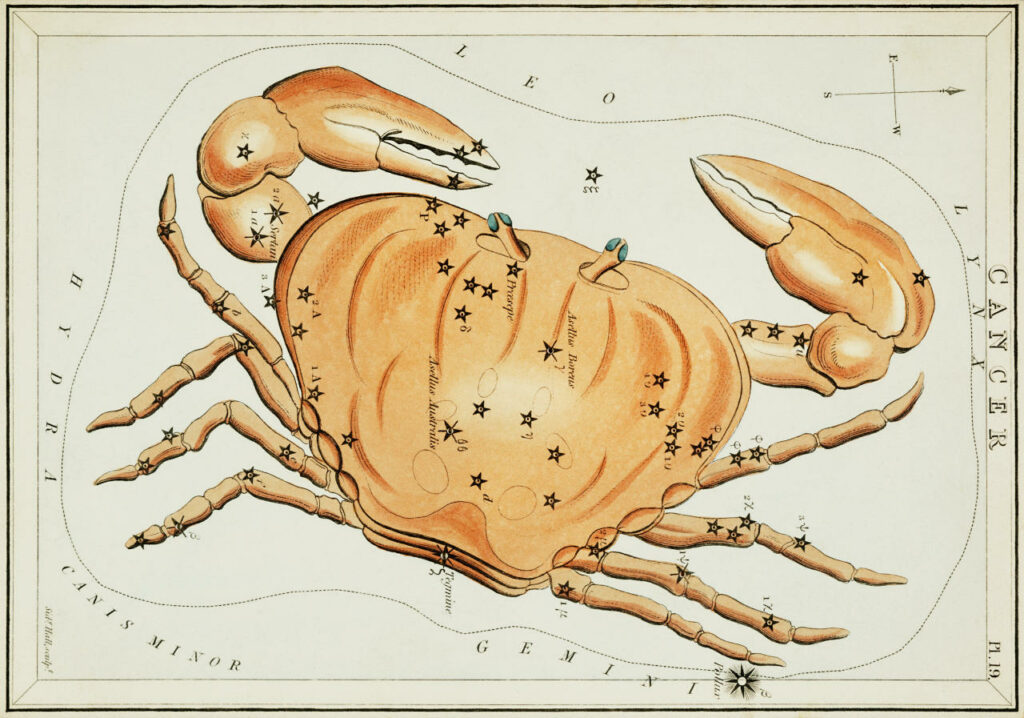
Cancer is the fourth sign of the zodiac. It begins the summer season and marks the summer solstice, when the Sun reaches its northernmost point in the sky. Cancer begins a new seasonal phase, but it does so through water, feeling, and protection.
Cancer is:
- Feminine
- Nocturnal
- Cardinal
- Water
- Cold and moist
- Phlegmatic
- The house of the Moon
Because Cancer is a cardinal water sign ruled by the Moon, it is responsive, protective, and changeable. It begins and moves, but it does so through feeling, care, memory, and attachment.
Core Meaning of Cancer
Cancer signifies nurture, protection, emotional response, family life, and the need for safety. It is a sign that receives impressions deeply and reacts to changing conditions.
Common Cancer traits include:
- care
- sensitivity
- protectiveness
- receptivity
- emotional awareness
- attachment to home and family
- changeability
- caution and defense
Cancer can be kind, nurturing, and deeply responsive. It can also be moody, defensive, indirect, or unstable. Because it is ruled by the Moon, Cancer often changes with circumstance, mood, and environment.
Planets in Cancer
A planet in Cancer tends to act in a more receptive, protective, and emotionally responsive way. It becomes more concerned with safety, belonging, care, and memory.
For example:
- The Moon in Cancer is in her own sign and can express nurture, feeling, bodily life, and care with strength.
- Venus in Cancer may approach love through loyalty, tenderness, protection, and emotional closeness.
- Mercury in Cancer may think through memory, feeling, family, and personal experience.
- Mars in Cancer is in its fall and may struggle to act directly. Anger may become defensive, indirect, or tied to emotional hurt.
Cancer gives planets a caring and protective style. It supports planets that work through nurture, response, and connection. It may challenge planets that need distance, dryness, or direct action.
Cancer and the Body
In traditional astrology, Cancer rules the chest, breasts, and stomach.
Diseases and conditions associated with Cancer may include:
- weak digestion
- cold stomach
- coughs
- phlegm-related conditions
- swelling or fluid retention
- breast-related conditions
- stomach complaints
Because Cancer is cold and moist, its conditions may involve fluids, phlegm, softness, swelling, or weakness in digestion.
Cancer and Places
William Lilly connects Cancer with water, wet places, and enclosed or hidden areas.
Cancer may signify:
- the sea
- large rivers
- navigable waters
- springs and wells
- cellars
- wash-houses
- marshes
- ditches with rushes or sedges
- sea banks
- trenches
- cisterns
These places reflect Cancer’s watery, moist, fertile, and protective nature.
Traditional Description
Traditional authors describe Cancer as feminine, nocturnal, movable, watery, mute, fruitful, and ruled by the Moon. Vettius Valens links Cancer with public life, popularity, changeability, travel, pleasure, and a tendency to shift in mind or action. William Lilly describes Cancer as cold, moist, phlegmatic, solstitial, fruitful, and slow of voice.
These descriptions show the same basic idea: Cancer is a sign of feeling, movement, protection, and change. It responds to life through care, memory, and emotional perception.
Key Idea
Cancer is the sign of nurture, protection, feeling, and emotional response.
When you read a planet in Cancer, ask:
How does this planet act when it is made more protective, receptive, changeable, and emotionally responsive?
Further Reading
- Cancer the Crab by Deborah Houlding on Skyscript
- Cancer: The Crab by Geoffrey Ballinger on Satya Astrology
Leo
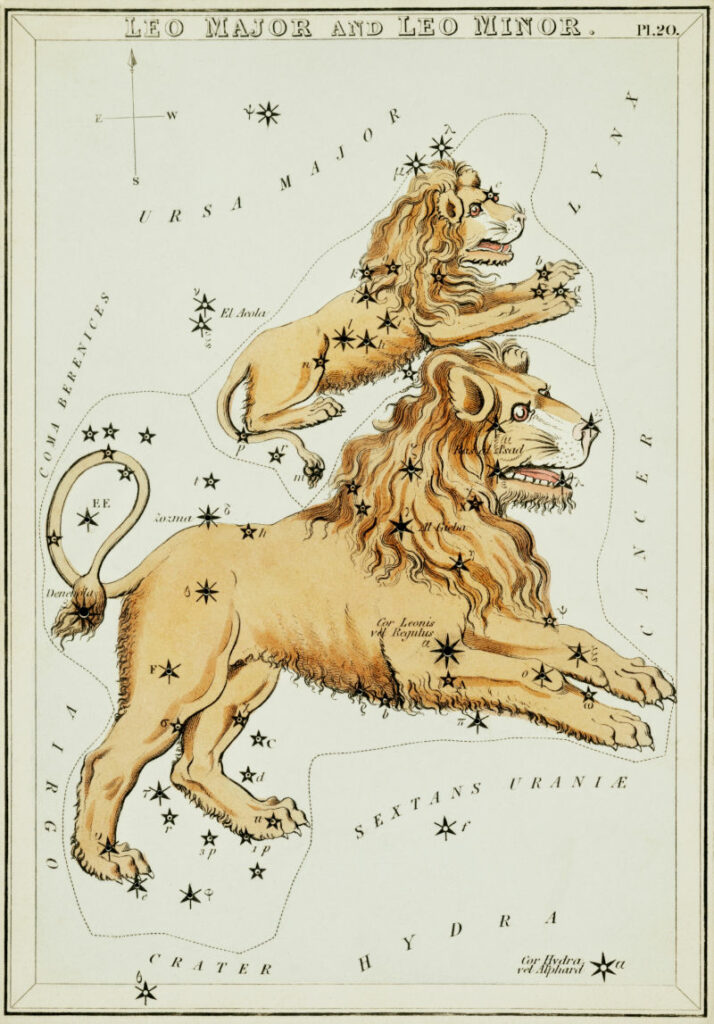
Leo is the fifth sign of the zodiac. It comes after Cancer and stabilizes the summer season. If Cancer begins summer, Leo holds its heat and displays its full strength.
Leo is:
- Masculine
- Diurnal
- Fixed
- Fire
- Hot and dry
- Choleric
- The house of the Sun
Because Leo is a fixed fire sign ruled by the Sun, it is proud, radiant, steady, and commanding. It wants to shine, lead, and be recognized.
Core Meaning of Leo
Leo signifies honor, confidence, authority, generosity, and display. It is a sign that seeks dignity and recognition.
Common Leo traits include:
- pride
- courage
- loyalty
- warmth
- generosity
- ambition
- confidence
- desire for honor
- need for appreciation
Leo can be noble, faithful, protective, and magnanimous. It can also become arrogant, dramatic, domineering, or too concerned with status. Because it is ruled by the Sun, Leo is connected with kingship, authority, visibility, and public honor.
Planets in Leo
A planet in Leo tends to act proudly, confidently, and visibly. It wants to be noticed and respected.
For example:
- The Sun in Leo is in its own sign and can express authority, confidence, and leadership with strength.
- The Moon in Leo may seek emotional recognition, praise, and a visible role in the life of others.
- Mercury in Leo may speak with confidence, drama, and authority.
- Venus in Leo may love grandly, generously, and with a desire to be admired.
- Mars in Leo may fight for honor, status, and personal pride.
Leo gives planets a bold and expressive style. It supports planets that need visibility, dignity, and confidence. It may challenge planets that need humility, restraint, or quiet service.
Leo and the Body
In traditional astrology, Leo rules the heart, ribs, sides, and upper back.
Diseases and conditions associated with Leo may include:
- heart weakness
- heart disease
- pain in the back
- pain in the ribs or sides
- burning fevers
- eye problems
- jaundice
- inflammatory conditions
Because Leo is hot and dry, and ruled by the Sun, its conditions may involve heat, fever, strain, inflammation, or weakness of the heart and vital spirit.
Leo and Places
William Lilly connects Leo with royal, fiery, wild, and difficult places.
Leo may signify:
- palaces
- castles
- forts
- parks
- woods and forests
- desert places
- rocky or steep places
- places where wild beasts live
- places near fire, hearths, or chimneys
These places reflect Leo’s solar, fiery, royal, and bestial nature.
Traditional Description
Traditional authors describe Leo as masculine, diurnal, fixed, fiery, commanding, barren, and ruled by the Sun. Vettius Valens links Leo with nobility, dignity, command, independence, justice, and high rank. He also says that, when the ruler is well placed and supported by benefics, Leo can produce brilliant and glorious people, including rulers and powerful figures.
William Lilly describes Leo as hot, dry, choleric, commanding, bestial, barren, and of the fiery triplicity. These descriptions point to the same central meaning: Leo is a sign of strength, honor, visibility, and command.
Key Idea
Leo is the sign of honor, confidence, dignity, and visible power.
When you read a planet in Leo, ask:
How does this planet act when it wants to be seen, respected, and recognized?
Further Reading
- Leo the Lion by Deborah Houlding on Skyscript
- Leo: The Lion by Geoffrey Ballinger on Satya Astrology
Virgo
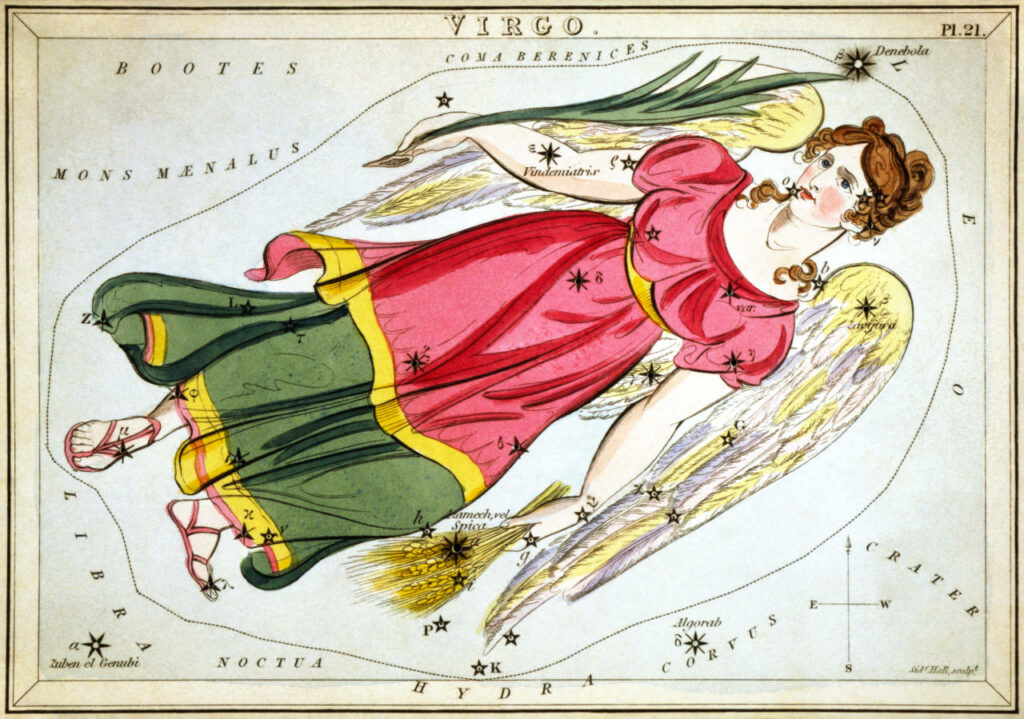
Virgo is the sixth sign of the zodiac. It comes after Leo and completes the summer season. If Leo displays the heat of summer, Virgo gathers, sorts, and prepares for the change into autumn.
Virgo is:
- Feminine
- Nocturnal
- Mutable
- Earth
- Cold and dry
- Melancholic
- The nocturnal house of Mercury
- The exaltation of Mercury
Because Virgo is a mutable earth sign ruled by Mercury, it is practical, careful, analytical, and service-oriented. It is concerned with usefulness, order, skill, correction, and improvement.
Core Meaning of Virgo
Virgo signifies discrimination, analysis, work, service, and practical intelligence. It is a sign that notices details and separates what is useful from what is not.
Common Virgo traits include:
- modesty
- care
- skill
- practicality
- organization
- criticism
- attention to detail
- useful work
- careful judgment
- concern with improvement
Virgo can be humble, thoughtful, and highly capable. It can also become anxious, overly critical, restless, or too focused on small faults. Because it is ruled by Mercury, Virgo is linked with calculation, writing, accounting, administration, study, craft, and technical skill.
Planets in Virgo
A planet in Virgo tends to act carefully, practically, and analytically. It becomes more focused on details, methods, and useful results.
For example:
- Mercury in Virgo is in its own sign and exaltation. It can show strong skill in analysis, speech, writing, calculation, and practical judgment.
- The Moon in Virgo may respond to life through service, care, order, and attention to daily needs.
- Venus in Virgo is in her fall. Love and pleasure may become more cautious, modest, selective, or critical.
- Mars in Virgo may act through technical skill, precise effort, criticism, and problem-solving.
Virgo gives planets a careful and discriminating style. It supports planets that work through planning, service, analysis, and practical skill. It may challenge planets that need ease, broad expression, or emotional softness.
Virgo and the Body
In traditional astrology, Virgo rules the belly, bowels, and intestines.
Diseases and conditions associated with Virgo may include:
- digestive trouble
- colic
- intestinal problems
- wind in the bowels
- worms
- obstruction in the belly
- weakness of the digestive system
Because Virgo is cold, dry, and earthy, its conditions may involve blockage, dryness, nervous digestion, or difficulty processing food.
Virgo and Places
William Lilly connects Virgo with places of study, storage, food preparation, and grain.
Virgo may signify:
- studies
- rooms with books
- closets
- dairies
- cornfields
- granaries
- malt-houses
- hayricks
- places where wheat, barley, peas, cheese, or butter are stored
These places reflect Virgo’s earthy, practical, orderly, and Mercurial nature.
Traditional Description
Traditional authors describe Virgo as feminine, nocturnal, mutable, earthy, barren, and ruled by Mercury. Vettius Valens links Virgo with modesty, religious feeling, care, administration, stewardship, accounting, writing, acting, technical arts, and the search for hidden knowledge. William Lilly describes Virgo as cold, melancholy, barren, feminine, nocturnal, and the house and exaltation of Mercury.
These descriptions point to the same central meaning: Virgo is a sign of skill, care, service, analysis, and practical intelligence. It observes, sorts, improves, and manages.
Key Idea
Virgo is the sign of analysis, service, order, and practical skill.
When you read a planet in Virgo, ask:
How does this planet act when it is made more careful, modest, analytical, and useful?
Further Reading
- Virgo the Maiden by Deborah Houlding on Skyscript
- Virgo: The Maiden by Geoffrey Ballinger on Satya Astrology
Libra
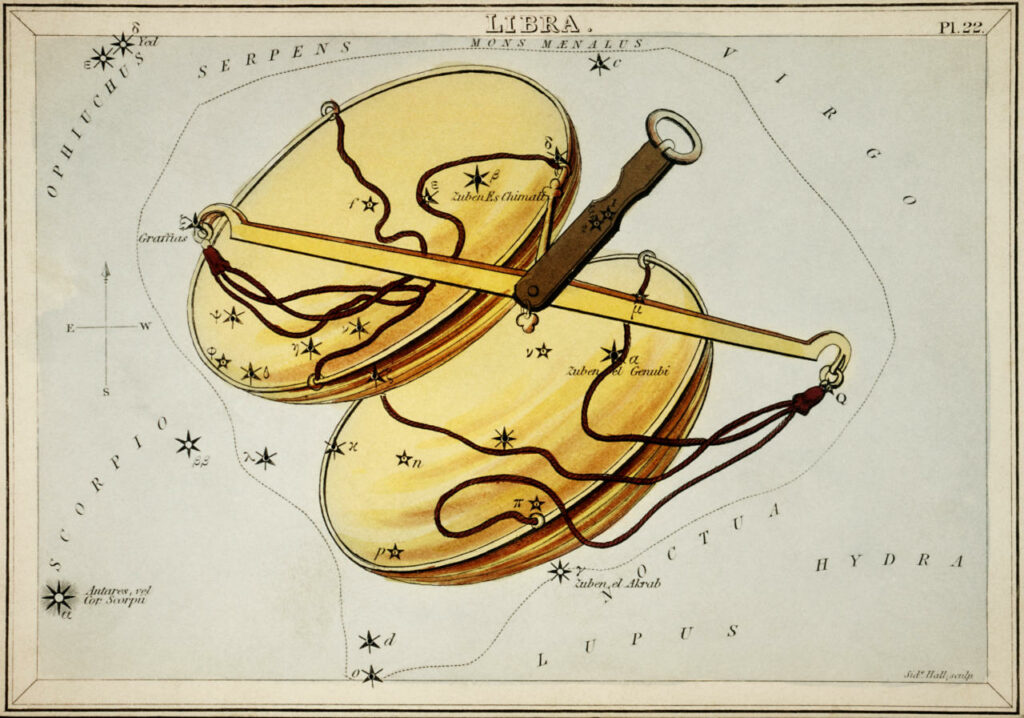
Libra is the seventh sign of the zodiac. It begins the autumn season and marks the autumn equinox, when day and night are equal. If Virgo completes summer through analysis and sorting, Libra begins autumn through balance, exchange, and judgment.
Libra is:
- Masculine
- Diurnal
- Cardinal
- Air
- Hot and moist
- Sanguine
- The diurnal house of Venus
Because Libra is a cardinal air sign ruled by Venus, it is social, rational, graceful, and concerned with balance. It wants to connect, compare, judge, and bring things into proportion.
Core Meaning of Libra
Libra signifies balance, fairness, social exchange, judgment, and agreement. It is a sign that weighs one thing against another.
Common Libra traits include:
- charm
- grace
- sociability
- fairness
- judgment
- diplomacy
- rational thought
- love of beauty
- concern with balance
- desire for agreement
Libra can be civil, thoughtful, pleasant, and refined. It can also become indecisive, overly dependent on approval, or too concerned with appearances. Because it is ruled by Venus, Libra is linked with beauty, harmony, friendship, marriage, art, and social conduct.
Planets in Libra
A planet in Libra tends to act through comparison, relationship, and judgment. It becomes more social, graceful, and aware of balance.
For example:
- Venus in Libra is in her own sign and can express harmony, beauty, love, and social grace with strength.
- The Sun in Libra is in its fall. The Sun’s desire for singular authority may be weakened in a sign focused on balance and shared judgment.
- Mercury in Libra may think through comparison, fairness, law, argument, and social reasoning.
- Mars in Libra is in detriment. Mars may struggle because direct force is placed in a sign that seeks peace, balance, and agreement.
Libra gives planets a social and judging style. It supports planets that need harmony, diplomacy, comparison, and refined expression. It may challenge planets that need direct command, solitary action, or immediate force.
Libra and the Body
In traditional astrology, Libra rules the kidneys, lower back, loins, and related areas.
Diseases and conditions associated with Libra may include:
- kidney problems
- bladder problems
- lower back weakness
- pain in the loins
- gravel or stones
- blood impurities
- ulcers or swelling near the kidneys or bladder
Because Libra is hot and moist, and ruled by Venus, its conditions may involve balance, fluids, blood, and the organs that help regulate the body.
Libra and Places
William Lilly connects Libra with airy, high, clean, and balanced places.
Libra may signify:
- windmills
- barns and out-houses
- places where wood is cut
- saw-pits
- hillsides
- mountain tops
- sandy or gravelly fields
- places with clear air
- upper rooms
- chambers and garrets
- rooms within rooms
These places reflect Libra’s airy, cardinal, Venusian, and balanced nature.
Traditional Description
Traditional authors describe Libra as masculine, diurnal, cardinal, airy, humane, equinoctial, and ruled by Venus. Vettius Valens links Libra with justice, nobility, public affairs, measures, crops, vineyards, artisans, and changes in fortune. William Lilly describes Libra as hot, moist, sanguine, movable, equinoctial, cardinal, humane, and the chief house of Venus.
These descriptions point to the same central meaning: Libra is a sign of balance, judgment, proportion, social order, and cultivated exchange. It compares, measures, harmonizes, and seeks agreement.
Key Idea
Libra is the sign of balance, judgment, harmony, and social exchange.
When you read a planet in Libra, ask:
How does this planet act when it is made more social, graceful, judging, and concerned with balance?
Further Reading
- Libra the Scales by Deborah Houlding on Skyscript
- Libra: The Scales by Geoffrey Ballinger on Satya Astrology
Scorpio
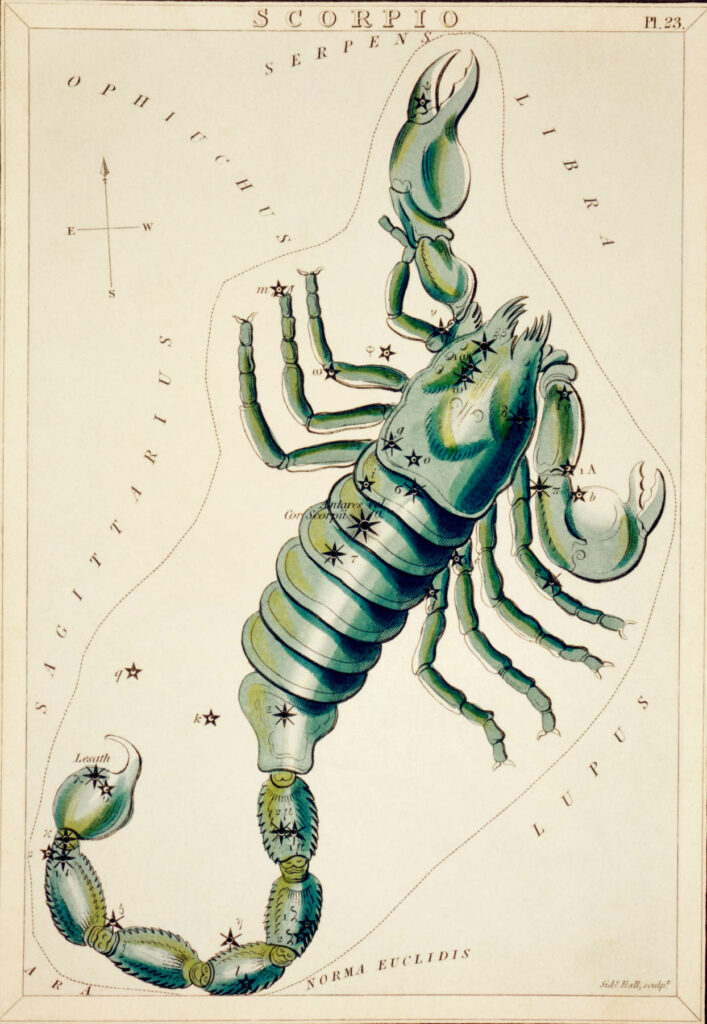
Scorpio is the eighth sign of the zodiac. It comes after Libra and stabilizes the autumn season. If Libra begins autumn through balance and judgment, Scorpio deepens autumn through intensity, secrecy, and emotional force.
Scorpio is:
- Feminine
- Nocturnal
- Fixed
- Water
- Cold and moist
- Phlegmatic
- The nocturnal house of Mars
Because Scorpio is a fixed water sign ruled by Mars, it is intense, private, defensive, and forceful. It does not act openly like Aries, the other sign of Mars. Scorpio acts through depth, endurance, strategy, and hidden power.
Core Meaning of Scorpio
Scorpio signifies intensity, secrecy, desire, danger, survival, and emotional fixation. It is a sign that holds feelings deeply and does not easily release them.
Common Scorpio traits include:
- passion
- secrecy
- persistence
- suspicion
- emotional depth
- protectiveness
- jealousy
- hidden strength
- strategic action
- resistance to change
Scorpio can be loyal, powerful, brave, and deeply committed. It can also become obsessive, resentful, manipulative, or destructive when poorly expressed. Because it is ruled by Mars, Scorpio is linked with conflict, danger, cutting, poison, fear, injury, and strong passions.
Planets in Scorpio
A planet in Scorpio tends to act with intensity, secrecy, and emotional force. It becomes more guarded, fixed, and driven by strong desire or fear.
For example:
- Mars in Scorpio is in its own sign and can act with strategy, endurance, courage, and hidden force.
- The Moon in Scorpio is in her fall. Emotional life may become more intense, fearful, guarded, or difficult to settle.
- Venus in Scorpio is in detriment. Love and pleasure may become passionate, possessive, troubled, or bound up with jealousy.
- Mercury in Scorpio may think deeply, investigate hidden matters, and speak carefully or sharply.
Scorpio gives planets a deep and forceful style. It supports planets that need endurance, secrecy, and crisis management. It may challenge planets that need ease, openness, or emotional softness.
Scorpio and the Body
In traditional astrology, Scorpio rules the bladder, genitals, and private parts of the body.
Diseases and conditions associated with Scorpio may include:
- bladder problems
- stones or gravel
- fistulas
- piles
- ruptures
- diseases of the genitals
- reproductive disorders
- infections or hidden illnesses
Because Scorpio is cold, moist, fixed, and ruled by Mars, its conditions may involve retention, inflammation, infection, poison, pain, or problems in hidden parts of the body.
Scorpio and Places
William Lilly connects Scorpio with wet, muddy, hidden, and unpleasant places. It is also linked with places where poisonous or creeping creatures may be found.
Scorpio may signify:
- muddy ground
- marshes
- quagmires
- stinking lakes
- sinks
- ruined houses near water
- gardens
- orchards
- vineyards
- kitchens
- larders
- wash-houses
- places where insects or poisonous creatures live
These places reflect Scorpio’s watery, fixed, hidden, and martial nature.
Traditional Description
Traditional authors describe Scorpio as feminine, nocturnal, fixed, watery, mute, fruitful, and ruled by Mars. Vettius Valens gives Scorpio a severe description, linking it with destruction, secrecy, crime, poison, and loss. William Lilly also says Scorpio can represent subtle and deceitful people when poorly expressed.
These descriptions should be read carefully. Traditional authors often describe the difficult side of a sign in strong language. The core meaning is that Scorpio is a sign of hidden force, danger, secrecy, desire, and emotional intensity. Its nature is not light or open. It works below the surface.
Key Idea
Scorpio is the sign of intensity, secrecy, passion, and hidden force.
When you read a planet in Scorpio, ask:
How does this planet act when it is made more intense, guarded, fixed, and driven by hidden desire or fear?
Further Reading
- Scorpio the Scorpion by Deborah Houlding on Skyscript
- Scorpio: The Scorpion by Geoffrey Ballinger on Satya Astrology
Sagittarius
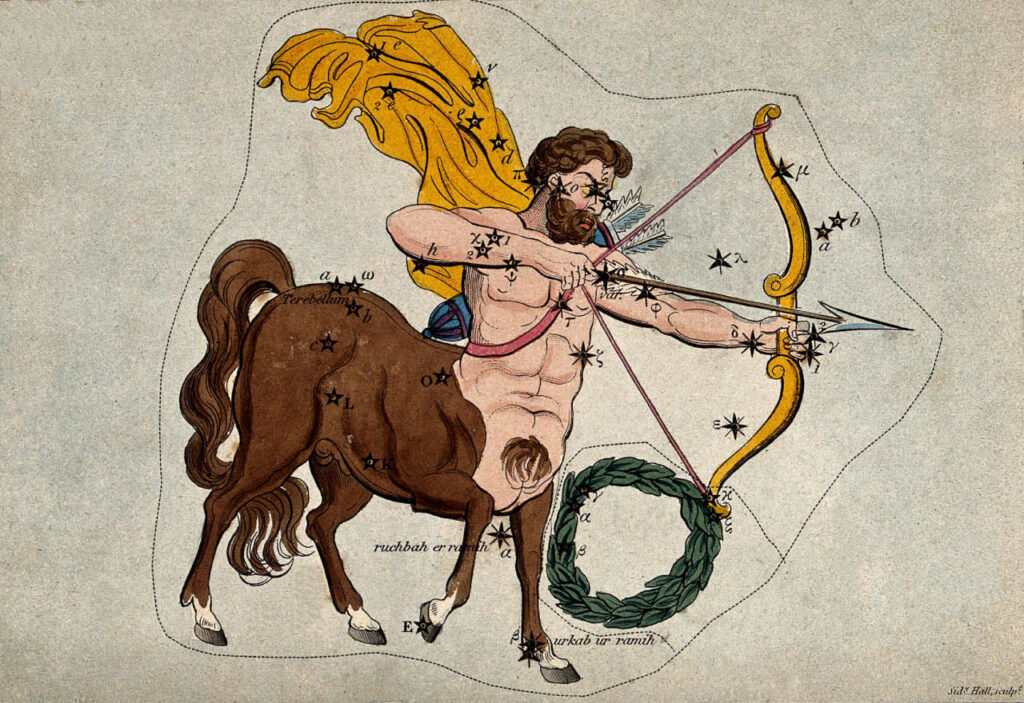
Sagittarius is the ninth sign of the zodiac. It comes after Scorpio and completes the autumn season. If Scorpio deepens autumn through intensity and secrecy, Sagittarius turns outward toward movement, vision, and wider meaning.
Sagittarius is:
- Masculine
- Diurnal
- Mutable
- Fire
- Hot and dry
- Choleric
- The diurnal house of Jupiter
- The joy of Jupiter
Because Sagittarius is a mutable fire sign ruled by Jupiter, it is active, expansive, hopeful, and future-oriented. It seeks meaning, movement, knowledge, and freedom.
Core Meaning of Sagittarius
Sagittarius signifies exploration, aspiration, faith, movement, and the search for truth. It is a sign that looks beyond the present situation and aims toward a larger goal.
Common Sagittarius traits include:
- honesty
- generosity
- enthusiasm
- adventure
- confidence
- optimism
- love of learning
- interest in distant places
- desire for freedom
- concern with belief and meaning
Sagittarius can be noble, hopeful, and broad-minded. It can also become careless, excessive, blunt, restless, or prone to exaggeration. Because it is ruled by Jupiter, Sagittarius is linked with religion, philosophy, law, teaching, judgment, travel, and the desire for a higher purpose.
Planets in Sagittarius
A planet in Sagittarius tends to act with confidence, enthusiasm, and a desire for expansion. It becomes more outward, idealistic, and directed toward future possibilities.
For example:
- Jupiter in Sagittarius is in its own sign and can express faith, wisdom, generosity, and broad vision with strength.
- The Sun in Sagittarius may seek honor through knowledge, teaching, travel, or moral purpose.
- Mercury in Sagittarius is in detriment. It may think broadly and philosophically, but may struggle with detail, precision, or careful speech.
- Mars in Sagittarius may act boldly for a belief, cause, journey, or challenge.
Sagittarius gives planets a spirited and expansive style. It supports planets that need movement, confidence, learning, and broad vision. It may challenge planets that need restraint, detail, or close attention to practical limits.
Sagittarius and the Body
In traditional astrology, Sagittarius rules the thighs and buttocks.
Diseases and conditions associated with Sagittarius may include:
- injuries to the thighs
- pain in the hips or buttocks
- falls from horses or animals
- injuries from large animals
- heated blood
- fevers
- harm from fire, heat, or excess in sports
Because Sagittarius is hot, dry, fiery, and partly bestial, its conditions may involve heat, motion, falls, strain, or injury during active pursuits.
Sagittarius and Places
William Lilly connects Sagittarius with horses, large animals, high places, and heat.
Sagittarius may signify:
- stables for large horses
- places where war horses or strong animals are kept
- fields with hills or raised ground
- the highest part of land
- upper rooms
- places near fire
- places used for sport, riding, or active movement
These places reflect Sagittarius’ fiery, bestial, elevated, and Jupiterian nature.
Traditional Description
Traditional authors describe Sagittarius as masculine, diurnal, mutable, fiery, double-bodied, and ruled by Jupiter. Vettius Valens links Sagittarius with nobility, justice, generosity, brotherly love, victory over enemies, reputation, benefaction, and mysterious action. William Lilly describes Sagittarius as hot, dry, choleric, common, double-bodied, and the house and joy of Jupiter.
These descriptions point to the same central meaning: Sagittarius is a sign of motion, faith, breadth, honor, and aspiration. It aims upward and outward. It seeks a wider field of action and meaning.
Key Idea
Sagittarius is the sign of exploration, faith, movement, and higher purpose.
When you read a planet in Sagittarius, ask:
How does this planet act when it is made more hopeful, expansive, adventurous, and directed toward a larger goal?
Further Reading
- Sagittarius the Archer by Deborah Houlding on Skyscript
- Sagittarius: The Archer by Geoffrey Ballinger on Satya Astrology
Capricorn
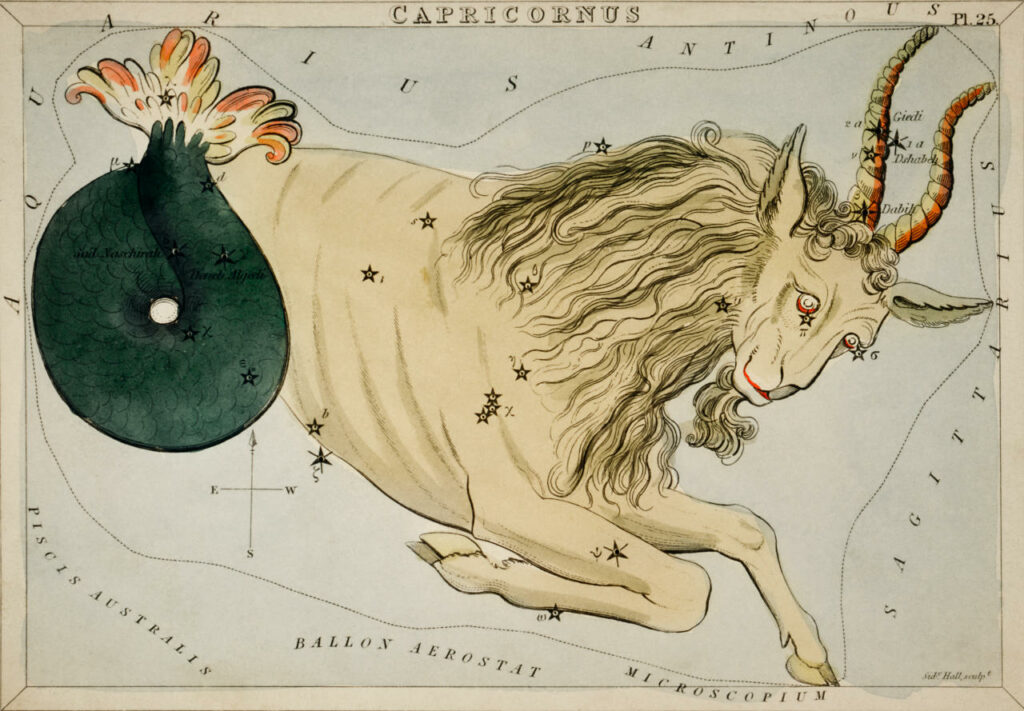
Capricorn is the tenth sign of the zodiac. It begins the winter season and marks the winter solstice. At this point, the Sun reaches its lowest point in the year and then begins to climb northward again.
Capricorn begins in darkness and cold, but it also marks a turning point. This gives the sign a serious, enduring, and goal-oriented nature.
Capricorn is:
- Feminine
- Nocturnal
- Cardinal
- Earth
- Cold and dry
- Melancholic
- The nocturnal house of Saturn
- The exaltation of Mars
Because Capricorn is a cardinal earth sign ruled by Saturn, it is careful, practical, disciplined, and focused on long-term results. It begins, but it begins cautiously and with a plan.
Core Meaning of Capricorn
Capricorn signifies labor, endurance, responsibility, structure, and worldly effort. It is a sign that works through patience, hardship, and steady ambition.
Common Capricorn traits include:
- discipline
- caution
- patience
- responsibility
- organization
- endurance
- seriousness
- practical planning
- concern with rank or position
- willingness to work through difficulty
Capricorn can be reliable, industrious, and capable of long effort. It can also become pessimistic, rigid, fearful, or overly burdened by duty. Because it is ruled by Saturn, Capricorn often deals with limits, work, time, age, hardship, authority, and lasting structures.
Planets in Capricorn
A planet in Capricorn tends to act carefully, seriously, and with concern for practical outcomes. It becomes more disciplined, restrained, and goal-oriented.
For example:
- Saturn in Capricorn is in its own sign and can express discipline, endurance, structure, and authority with strength.
- Mars in Capricorn is exalted. Mars gains focus, control, and strategic force in this sign.
- The Moon in Capricorn is in detriment. The Moon’s need for softness, nurture, and emotional ease may feel restrained or burdened.
- Mercury in Capricorn may think in a practical, organized, serious, and strategic way.
Capricorn gives planets a cautious and productive style. It supports planets that need discipline, structure, and long-term effort. It may challenge planets that need softness, ease, emotional freedom, or quick movement.
Capricorn and the Body
In traditional astrology, Capricorn rules the knees.
Diseases and conditions associated with Capricorn may include:
- knee pain
- knee injuries
- strains
- fractures
- stiffness
- skin problems
- scabs or itching
- chronic dry conditions
Because Capricorn is cold, dry, earthy, and ruled by Saturn, its conditions may involve stiffness, dryness, weakness, strain, or long-lasting problems.
Capricorn and Places
William Lilly connects Capricorn with cattle, farming tools, barren ground, and low or dark places.
Capricorn may signify:
- cow-houses
- places where calves are kept
- sheep-pens
- places where farming tools are stored
- old wood storage
- barren fields
- fallow ground
- thorny or bushy land
- dunghills
- low, dark places in houses
- places near the ground or threshold
These places reflect Capricorn’s earthy, Saturnian, rural, and laborious nature.
Traditional Description
Traditional authors describe Capricorn as feminine, nocturnal, cardinal, earthy, cold, dry, solstitial, and ruled by Saturn. Vettius Valens gives Capricorn a severe description, linking it with toil, trouble, barrenness, secrecy, farming, sculpture, and hardship. William Lilly describes Capricorn as cold, dry, melancholy, moveable, domestical, four-footed, and the exaltation of Mars.
These descriptions show the same central meaning: Capricorn is a sign of labor, endurance, difficulty, structure, and practical achievement. It does not promise ease. It asks for discipline and persistence.
Key Idea
Capricorn is the sign of discipline, labor, endurance, and worldly structure.
When you read a planet in Capricorn, ask:
How does this planet act when it is made more cautious, serious, practical, and focused on long-term results?
Further Reading
- Capricorn the Goatfish by Deborah Houlding on Skyscript
- Capricorn: The Goatfish by Geoffrey Ballinger on Satya Astrology
Aquarius
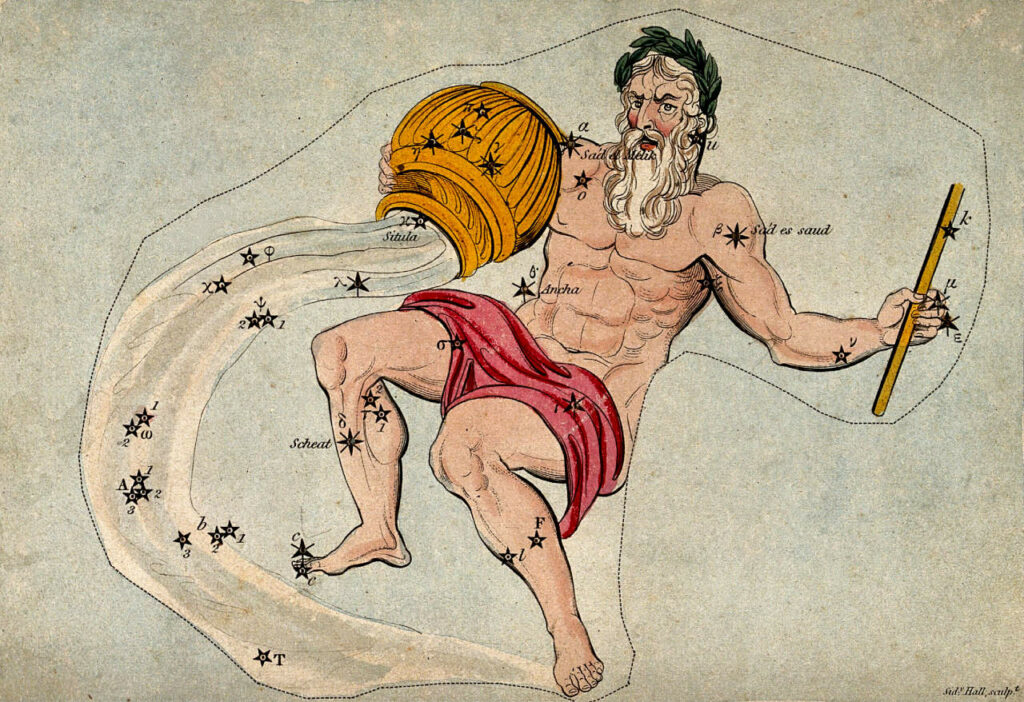
Aquarius is the eleventh sign of the zodiac. It comes after Capricorn and stabilizes the winter season. If Capricorn begins winter through endurance and labor, Aquarius holds the cold of winter through thought, structure, and distance.
Aquarius is:
- Masculine
- Diurnal
- Fixed
- Air
- Hot and moist
- Sanguine
- The diurnal house of Saturn
Because Aquarius is a fixed air sign ruled by Saturn, it is rational, steady, humane, and detached. It is concerned with ideas, systems, groups, science, and the larger order of society.
Core Meaning of Aquarius
Aquarius signifies reason, society, structure, detachment, and concern for collective life. It is a sign that thinks beyond personal feeling and looks toward wider human systems.
Common Aquarius traits include:
- objectivity
- sincerity
- steadiness
- social concern
- intellectual distance
- interest in systems
- concern for humanity
- friendship and group life
- fixed opinions
- scientific or technical thought
Aquarius can be thoughtful, principled, and socially aware. It can also become cold, stubborn, detached, contrary, or too fixed in its own views. Because it is ruled by Saturn, Aquarius is linked with seriousness, structure, science, rules, and long-term social order.
Planets in Aquarius
A planet in Aquarius tends to act in a more rational, detached, and fixed way. It becomes more concerned with ideas, principles, groups, and systems.
For example:
- Saturn in Aquarius is in its own sign and can express discipline, order, reason, and social structure with strength.
- Mercury in Aquarius may think in an objective, technical, scientific, or systematic way.
- Venus in Aquarius may approach friendship, love, and social life through shared ideas, loyalty, and distance.
- Mars in Aquarius may fight for principles, groups, ideologies, or social causes. It can also show stubborn conflict or harsh judgment when poorly placed.
Aquarius gives planets a cool, intellectual, and principled style. It supports planets that need logic, stability, structure, and social awareness. It may challenge planets that need warmth, intimacy, or emotional openness.
Aquarius and the Body
In traditional astrology, Aquarius rules the lower legs, shins, ankles, and the circulation of blood.
Diseases and conditions associated with Aquarius may include:
- leg pain
- ankle weakness
- cramps
- circulatory problems
- problems in the veins
- stiffness in the lower legs
- cold or windy conditions in the body
Because Aquarius is fixed, airy, and ruled by Saturn, its conditions may involve stiffness, obstruction, circulation, dryness, or long-lasting weakness.
Aquarius and Places
William Lilly connects Aquarius with high, uneven, newly opened, and mineral-rich places.
Aquarius may signify:
- hilly places
- uneven ground
- newly dug places
- quarries
- places where stone or minerals are removed
- roofs
- eaves
- upper parts of houses
- vineyards
- places near small springs or conduits
These places reflect Aquarius’ airy, fixed, Saturnian, and elevated nature.
Traditional Description
Traditional authors describe Aquarius as masculine, diurnal, fixed, airy, humane, rational, and ruled by Saturn. Vettius Valens gives Aquarius a severe description, linking it with stubbornness, secrecy, trouble from burdens or hard work, and labor with hard materials. William Lilly describes Aquarius as hot, moist, sanguine, fixed, rational, humane, masculine, and the chief house of Saturn.
These descriptions point to the same central meaning: Aquarius is a sign of reason, endurance, social order, and fixed thought. It is humane, but not always soft. It seeks structure, principle, and distance.
Key Idea
Aquarius is the sign of reason, social order, fixed ideas, and detached concern for humanity.
When you read a planet in Aquarius, ask:
How does this planet act when it is made more rational, fixed, detached, and concerned with larger human systems?
Further Reading
- Aquarius the Waterbearer by Deborah Houlding on Skyscript
- Aquarius: The Water Bearer by Geoffrey Ballinger on Satya Astrology
Pisces
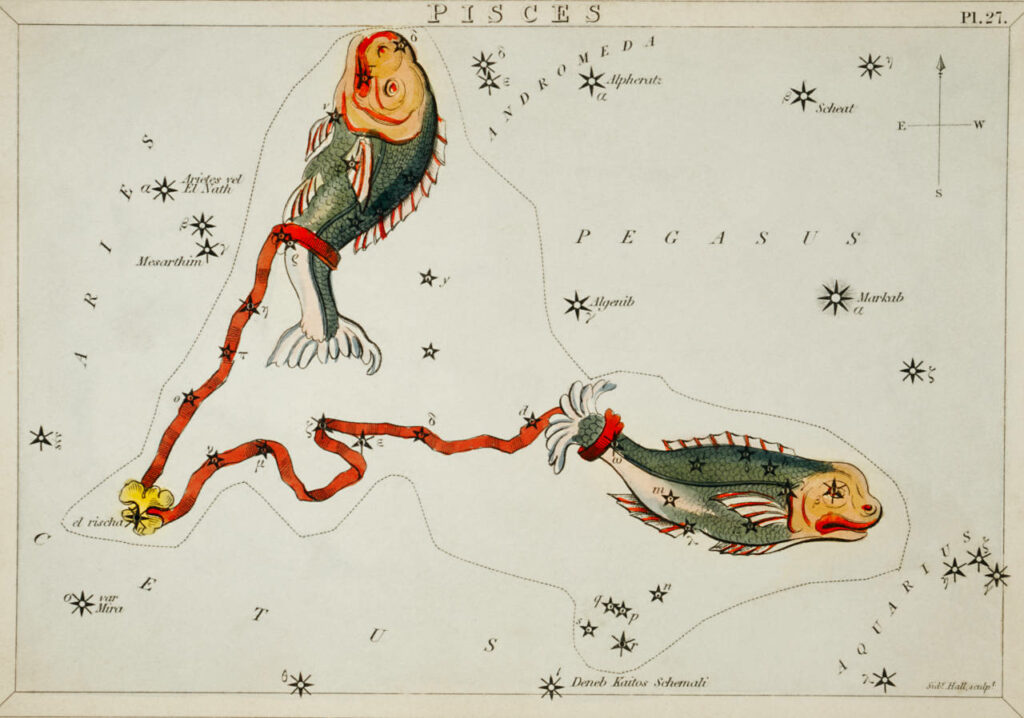
Pisces is the twelfth sign of the zodiac. It comes after Aquarius and completes the winter season. If Aquarius holds winter through reason and distance, Pisces dissolves winter through moisture, feeling, and release.
Pisces is:
- Feminine
- Nocturnal
- Mutable
- Water
- Cold and moist
- Phlegmatic
- The nocturnal house of Jupiter
- The exaltation of Venus
Because Pisces is a mutable water sign ruled by Jupiter, it is receptive, compassionate, imaginative, and changeable. It is concerned with feeling, faith, mercy, sacrifice, and the movement between one state and another.
Core Meaning of Pisces
Pisces signifies compassion, receptivity, imagination, surrender, and spiritual longing. It is a sign that feels deeply and often responds to life through sympathy and impression.
Common Pisces traits include:
- compassion
- generosity
- sensitivity
- imagination
- receptivity
- sacrifice
- artistic feeling
- spiritual interest
- emotional openness
- changeability
Pisces can be kind, forgiving, creative, and deeply sympathetic. It can also become unclear, passive, unstable, overly impressionable, or easily led by others. Because it is ruled by Jupiter, Pisces is linked with faith, mercy, religion, charity, abundance, and hope. Because Venus is exalted in Pisces, this sign can also show beauty, love, art, and devotion in a heightened form.
Planets in Pisces
A planet in Pisces tends to act in a more receptive, imaginative, and compassionate way. It becomes softer, more fluid, and more open to feeling, faith, and inspiration.
For example:
- Jupiter in Pisces is in its own sign and can express faith, generosity, mercy, and wisdom with strength.
- Venus in Pisces is exalted. Love, beauty, devotion, and artistic feeling may be expressed in an elevated way.
- Mercury in Pisces is in detriment and fall. The mind may become imaginative and symbolic, but may struggle with exact detail, clear boundaries, or practical precision.
- Mars in Pisces may act through emotion, faith, compassion, or indirect movement rather than direct force.
Pisces gives planets a soft and flowing style. It supports planets that need compassion, imagination, devotion, and spiritual feeling. It may challenge planets that need sharp judgment, firm boundaries, or exact speech.
Pisces and the Body
In traditional astrology, Pisces rules the feet.
Diseases and conditions associated with Pisces may include:
- foot pain
- lameness
- gout
- swelling in the feet
- aches in the feet
- moist skin conditions
- ulcers or sores
- cold and phlegmatic conditions
Because Pisces is cold, moist, watery, and mutable, its conditions may involve fluids, swelling, weakness, softness, or lack of firmness in the body.
Pisces and Places
William Lilly connects Pisces with wet places, springs, fish, and standing water.
Pisces may signify:
- watery ground
- springs
- fish ponds
- rivers full of fish
- places with many birds
- moats
- water mills
- places near wells or pumps
- places where water stands
- places where hermitages have been
These places reflect Pisces’ watery, fertile, secluded, and contemplative nature.
Traditional Description
Traditional authors describe Pisces as feminine, nocturnal, mutable, watery, double-bodied, fruitful, mute, and ruled by Jupiter. Vettius Valens links Pisces with changeability, wandering, fertility, popularity, and movement between good and bad fortune. William Lilly describes Pisces as cold, moist, phlegmatic, feminine, nocturnal, double-bodied, the house of Jupiter, and the exaltation of Venus.
These descriptions point to the same central meaning: Pisces is a sign of water, feeling, change, compassion, and release. It is not firm or rigid. It moves, receives, adapts, and often dissolves boundaries.
Key Idea
Pisces is the sign of compassion, imagination, faith, and surrender.
When you read a planet in Pisces, ask:
How does this planet act when it is made softer, more receptive, more imaginative, and more open to feeling or faith?
Further Reading
- Pisces the Fish by Deborah Houlding on Skyscript
- Pisces: The Fish by Geoffrey Ballinger on Satya Astrology
3. Two More Horoscopes
In this section, you will meet two more example charts that we will use throughout this course.
You have already worked with the charts of Charles Dickens and Petrarch. Now we will add two more horoscopes. These charts will give you more practice with signs, houses, sect, and planetary condition.
Nicolaus Copernicus
Nicolaus Copernicus was a Renaissance astronomer and scholar. He is best known for proposing that the Earth and the other planets move around the Sun. His chart is useful for this course because it gives us a strong example of learning, astronomy, religious office, publication, and intellectual work.
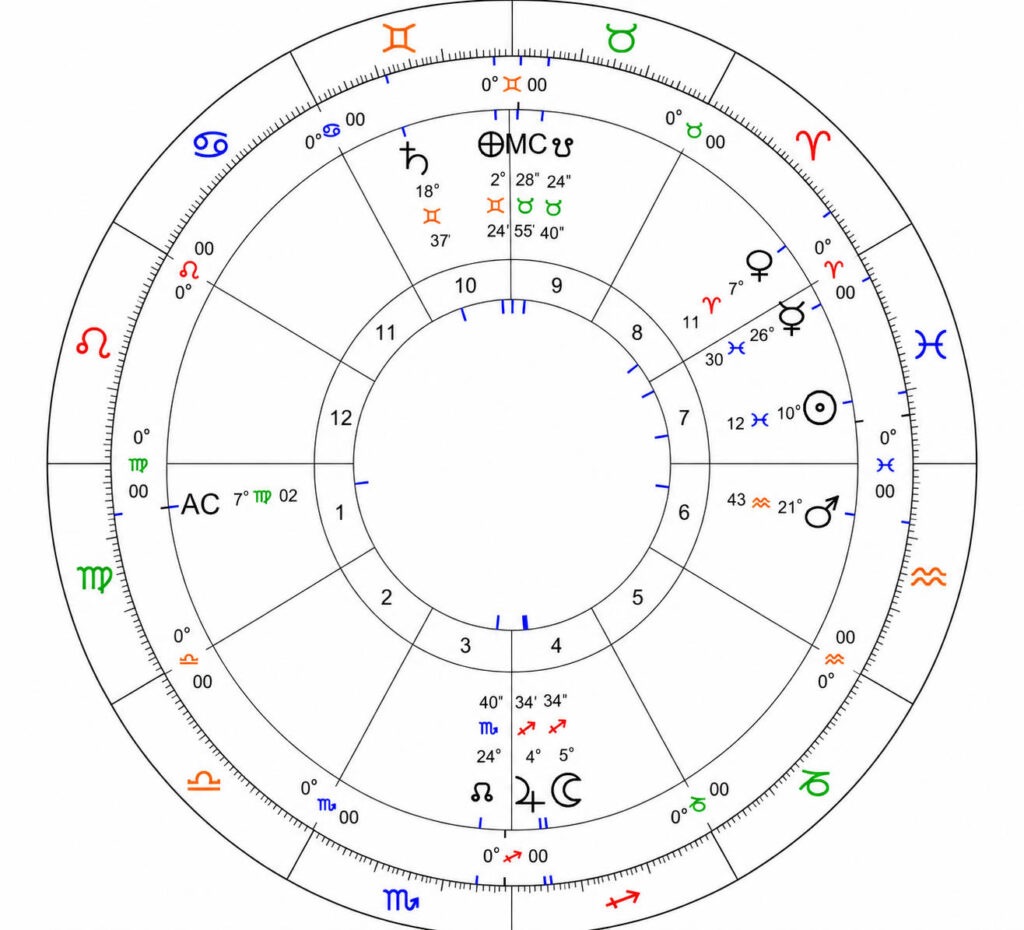
The birth chart of Nicolaus Copernicus can be created at astro.com using the chart settings introduced earlier in this course.
Sect of the Chart
In Copernicus’ chart, the Sun is above the horizon, but it is very close to sunset.
Because the Sun is so close to setting, we will treat this chart as nocturnal for the purposes of this course.
This is also supported by the timing of major life events when compared with the nocturnal firdaria sequence. Major Jupiter – University education at Kraków (1491-1495); appointed as canon of the Cathedral Chapter of Warmia; Jul-1501 – officially installed as a canon of the Ermland Chapter, May-1503 receives doctorate in canon law from the University of Ferrara; Major Mars – Physician to his uncle; North Node – around 1514 – proposed the heliocentric model in his The Little Commentary; Major Venus – 1528 – finalizes his treatise on monetary reform; writes his Bread Tariff; starts seeing Anna Schilling; Major Mercury – Rheticus helps Copernicus to publish On the Revolutions.
Mercury in the Chart
Mercury sets after the Sun on the western horizon.
For this reason, Mercury is considered nocturnal and feminine in Copernicus’ birth chart.
This is important because Mercury is one of the main planets to watch in the chart of a scholar, writer, astronomer, and mathematical thinker.
Planets in Signs and Houses
The table below gives the zodiacal longitude of each planet and point in Copernicus’ chart. It also shows the whole sign house placement.
| Planet or Point | Zodiacal Longitude | Whole Sign House |
| Ascendant | 7°02′ Virgo | 1 |
| Midheaven | 28°55′ Taurus | 9 |
| Saturn | 18°37′ Gemini | 10 |
| Jupiter | 4°34′ Sagittarius | 4 |
| Mars | 21°43′ Aquarius | 6 |
| Sun | 10°12′ Pisces | 7 |
| Venus | 7°11′ Aries | 8 |
| Mercury | 26°30′ Pisces | 7 |
| Moon | 5°34′ Sagittarius | 4 |
| North Node | 24°40′ Scorpio | 3 |
| South Node | 24°40′ Taurus | 9 |
| Part of Fortune | 2°24′ Gemini | 10 |
What to Notice First
At this stage of the course, do not try to judge the whole chart at once. Begin with simple observations.
Notice the following:
- The Ascendant is in Virgo, a sign ruled by Mercury.
- Mercury is in Pisces in the 7th whole sign house.
- The Sun is also in Pisces in the 7th whole sign house.
- The Moon and Jupiter are both in Sagittarius in the 4th whole sign house.
- Saturn is in Gemini in the 10th whole sign house.
- The Part of Fortune is also in Gemini in the 10th whole sign house.
These placements will become important later when we study planetary rulers, houses, aspects, and career significations.
For now, focus on the signs. Ask yourself:
- Which planets are in mutable signs?
- Which planets are in signs ruled by Mercury?
- Which planets are in signs ruled by Jupiter?
- Which planets are in masculine signs?
- Which planets are in feminine signs?
- Which planets are in signs of the air, earth, fire, or water triplicity?
This kind of simple chart observation is the first step in traditional delineation.
Key Idea
Copernicus’ chart gives you a useful example of a scholar’s horoscope.
For this lesson, your main task is not to interpret everything. Your task is to identify the planets, signs, houses, sect, and basic classifications clearly.
Bal Gangadhar Tilak
Bal Gangadhar Tilak was an Indian scholar, teacher, writer, and political leader. He was one of the major figures in the Indian independence movement. His chart is useful for this course because it gives us a strong example of public leadership, learning, courage, conflict, and devotion to a larger cause.
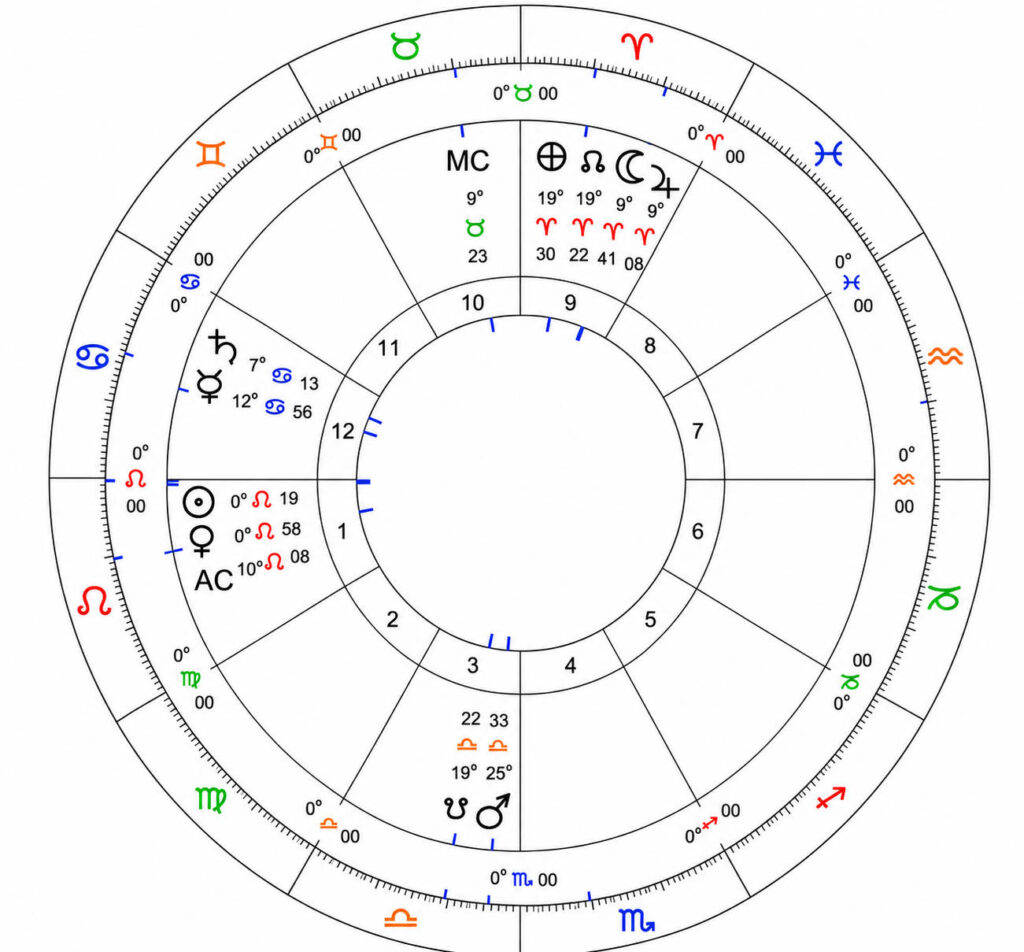
The birth chart of Bal Gangadhar Tilak can be created at astro.com using the chart settings introduced earlier in this course.
Sect of the Chart
In Tilak’s chart, the Sun is above the horizon.
For this reason, this is a diurnal chart.
This means the Sun is the sect light. Jupiter is the benefic of the sect, and Saturn is the malefic of the sect. These points will become more important later when we study planetary condition in greater detail.
Mercury in the Chart
Mercury rises before the Sun on the eastern horizon.
For this reason, Mercury is considered diurnal and masculine in Tilak’s birth chart.
This is important because Mercury can show learning, speech, writing, argument, teaching, and intellectual skill. These topics are important in Tilak’s life as a scholar, journalist, teacher, and political thinker.
Planets in Signs and Houses
The table below gives the zodiacal longitude of each planet and point in Tilak’s chart. It also shows the whole sign house placement.
| Planet or Point | Zodiacal Longitude | Whole Sign House |
| Ascendant | 10°08′ Leo | 1 |
| Midheaven | 9°23′ Taurus | 10 |
| Saturn | 7°13′ Cancer | 12 |
| Jupiter | 9°08′ Aries | 9 |
| Mars | 25°33′ Libra | 3 |
| Sun | 0°19′ Leo | 1 |
| Venus | 0°58′ Leo | 1 |
| Mercury | 12°56′ Cancer | 12 |
| Moon | 9°41′ Aries | 9 |
| North Node | 19°22′ Aries | 9 |
| South Node | 19°22′ Libra | 3 |
| Part of Fortune | 19°30′ Aries | 9 |
What to Notice First
At this stage of the course, begin with simple chart observations. Do not try to judge the whole chart at once.
Notice the following:
- The Ascendant is in Leo, the sign of the Sun.
- The Sun is in Leo in the 1st whole sign house.
- Venus is also in Leo in the 1st whole sign house.
- The Moon and Jupiter are both in Aries in the 9th whole sign house.
- The North Node and Part of Fortune are also in Aries in the 9th whole sign house.
- Mars is in Libra in the 3rd whole sign house.
- Saturn and Mercury are both in Cancer in the 12th whole sign house.
These placements will become useful later when we study rulers, houses, aspects, and life topics.
For now, focus on the signs. Ask yourself:
- Which planets are in fire signs?
- Which planets are in cardinal signs?
- Which planets are in signs ruled by the Sun?
- Which planets are in signs ruled by Mars?
- Which planets are in masculine signs?
- Which planets are in feminine signs?
- Which planets are in diurnal signs?
- Which planets are in nocturnal signs?
This simple process trains you to see the chart clearly before you interpret it.
Key Idea
Tilak’s chart gives you a useful example of a public leader’s horoscope.
For this lesson, your main task is not to judge the entire life. Your task is to identify the planets, signs, houses, sect, and basic classifications with accuracy.
4. Planets in Signs
Now you are ready to learn how to delineate a planet in a sign.
This is one of the simplest and most important skills in natal astrology. It is also one of the most useful. Before you judge houses, aspects, and more advanced conditions, you should first understand how a planet expresses itself through its sign.
A planet shows what is acting.
A sign shows how the planet acts.
The basic nature of the planet does not change. Mars is still Mars. Venus is still Venus. Mercury is still Mercury. But the sign modifies the planet’s style of expression.
For example:
- Mars always signifies action, heat, cutting, conflict, courage, and force.
- Venus always signifies love, beauty, pleasure, attraction, harmony, and relationship.
- Mercury always signifies speech, thought, writing, calculation, trade, and interpretation.
But Mars in Aries will not act like Mars in Taurus. Venus in Libra will not express herself like Venus in Scorpio. Mercury in Gemini will not work in the same way as Mercury in Pisces.
The planet keeps its own nature, but the sign gives it a manner, style, and condition of expression.
How to Delineate a Planet in a Sign
To delineate a planet in a sign, follow a simple process.
First, identify the nature of the planet.
Ask:
- What does this planet signify?
- Is it hot, cold, dry, or moist?
- Is it benefic, malefic, or variable?
- Is it masculine, feminine, diurnal, or nocturnal?
- What actions does this planet naturally perform?
Next, identify the nature of the sign.
Ask:
- What is the sign’s gender?
- What is the sign’s mode?
- What is the sign’s element or triplicity?
- What planet rules the sign?
- Is the sign compatible or difficult for the planet?
Then combine the two.
Ask:
How does this planet express its nature through this sign?
This is the heart of planet-in-sign delineation.
Example 1: Venus in Gemini
Venus signifies love, beauty, pleasure, attraction, friendship, and relationship. Venus likes to bring people together. She softens, beautifies, pleases, and creates union.
Gemini is a masculine, diurnal, mutable air sign. It is ruled by Mercury. This makes Gemini quick, verbal, curious, social, intelligent, and adaptable.
When Venus is in Gemini, Venus expresses love and attraction through Gemini’s style.
This may show:
- charm through speech
- wit in love
- pleasure in conversation
- attraction through intelligence
- social variety
- delight in letters, poems, songs, and words
- a playful or changeable style in relationships
Venus in Gemini can show someone who loves through words. This may include writing love letters, composing poetry, enjoying conversation, or forming relationships through shared ideas.
Petrarch, one of the example charts in this course, has Venus in Gemini. He was a man of letters and is famous for his love for Laura. Laura was already married, but Petrarch expressed his love through poems and songs. This is a clear example of Venus expressing love through the Mercurial and airy sign of Gemini.
Venus remains Venus. She still seeks love, beauty, and pleasure. But in Gemini, she seeks them through language, thought, wit, and communication.
Example 2: Mars in Virgo
Mars signifies action, courage, heat, cutting, conflict, force, and war. Mars acts by separating, attacking, burning, piercing, and moving with boldness.
Virgo is a feminine, nocturnal, mutable earth sign. It is ruled by Mercury. This makes Virgo practical, careful, analytical, modest, critical, and detail-oriented.
When Mars is in Virgo, Mars expresses action and conflict through Virgo’s style.
This may show:
- sharp words
- criticism
- technical skill
- precise action
- argument through details
- cutting and editing words
- conflict through analysis
- disciplined work with data or facts
Mars in Virgo can show someone who fights with words, corrects mistakes, cuts away errors, or works with precision. This can be difficult when it produces criticism, arguments, or harsh speech. It can be useful when it produces skill, analysis, editing, translation, research, or technical work.
Francis Galton had Mars in Virgo. He was a researcher, statistician, and data collector. This is a clear example of Mars acting through Virgo’s Mercurial and analytical style. Mars gives the drive to investigate and cut into a subject. Virgo gives attention to detail, classification, and practical method.
Mars remains Mars. It still acts, cuts, and separates. But in Virgo, it does this through analysis, criticism, data, and technical skill.
Compatible and Difficult Sign Placements
Some signs support the nature of a planet.
For example:
- Venus in Libra expresses Venus through one of her own signs.
- Mars in Aries expresses Mars through one of his own signs.
- Jupiter in Sagittarius expresses Jupiter through one of his own signs.
- Mercury in Gemini expresses Mercury through one of his own signs.
In these cases, the planet can express its nature more easily.
Other signs may work against the planet’s nature.
For example:
- Venus in Scorpio places Venus in a sign of Mars.
- Mars in Taurus places Mars in a sign of Venus.
- Mercury in Pisces places Mercury in a sign where it is weakened.
- The Moon in Capricorn places the Moon in the sign opposite Cancer.
In these cases, the planet still acts, but its expression may be more strained, mixed, or difficult.
This does not mean the person is bad or doomed. It means the planet must express itself through a sign that does not fully match its natural purpose.
Why This Matters
There are seven traditional planets and twelve signs. Their combinations create many different forms of expression.
The planet gives the core meaning.
The sign gives the style.
Together, they help explain the variety you see in human behavior, talents, struggles, choices, and life patterns.
Later in the course, you will add more layers. You will study houses, aspects, rulers, sect, solar phase, and other conditions. These will give more detail and clarity.
But planet-in-sign delineation is the foundation.
Before you ask, “What house is the planet in?” or “What aspects does the planet make?” first ask:
How is this planet expressing itself through this sign?
Key Idea
A planet shows what is acting. A sign shows how it acts.
When you delineate a planet in a sign, combine the planet’s nature with the sign’s gender, mode, element, and ruler. This gives you the planet’s basic style of expression.
Keywords Approach
One practical way to delineate a planet in a sign is to use the keywords approach.
This method helps you brainstorm possible meanings. It is especially useful when you are still learning how to combine planets and signs.
The process is simple:
- List a few keywords for the planet.
- List a few keywords for the sign.
- Combine one planet keyword with one sign keyword.
- Ask whether the combination creates a clear meaning.
- Keep the useful combinations and discard the weak ones.
This is not the final judgment of the chart. It is only a starting point.
A good delineation must also consider the planet’s house, ruler, aspects, sect, dignity, and the rest of the chart. But the keywords approach helps you begin.
Example 1: Saturn in Gemini
Saturn signifies control, restriction, discipline, fear, delay, management, labor, and hardship.
Gemini signifies communication, information, words, hands, learning, trade, and study.
When Saturn is placed in Gemini, you can combine these meanings.
| Saturn Keyword | Gemini Keyword | Possible Meaning |
| Control | Communication | Censored speech or restricted news |
| Management | Information | Information management |
| Restriction | Hands | Hand weakness, injury, or fracture |
| Discipline | Study | Serious learning or scientific work |
| Labor | Writing | Difficult or disciplined writing |
| Fear | Speech | Fear of speaking or guarded speech |
Not every combination will be useful. Some may fit the chart. Others may not.
Francis Bacon, the English philosopher who helped shape the scientific method, had Saturn in Gemini. This is a good example of Saturn’s discipline joined to Gemini’s learning, words, and intellectual method.
Saturn remains Saturn. It restricts, orders, and disciplines. In Gemini, it does this through speech, study, information, and mental work.
Example 2: Mercury in Taurus
Mercury signifies writing, speech, thought, calculation, drawing, trade, and skill.
Taurus signifies beauty, music, nature, stability, pleasure, the voice, and material form.
When Mercury is placed in Taurus, you can combine these meanings.
| Mercury Keyword | Taurus Keyword | Possible Meaning |
| Write | Beauty | Poetry |
| Write | Music | Lyrics or musical composition |
| Speak | Voice | Singing or pleasant speech |
| Draw | Nature | Nature drawing or botanical art |
| Think | Stability | Structured thought |
| Trade | Material goods | Practical business sense |
Walt Whitman, the American poet and author of Leaves of Grass, had Mercury in Taurus. This is a clear example of Mercury’s writing joined to Taurus’ beauty, nature, voice, and sensual experience.
Mercury remains Mercury. It writes, speaks, and thinks. In Taurus, it does this in a grounded, steady, natural, and often beautiful way.
Example 3: Mars in Virgo
Mars signifies force, action, cutting, conflict, courage, heat, competition, and separation.
Virgo signifies data, words, details, analysis, criticism, service, the belly, and practical work.
When Mars is placed in Virgo, you can combine these meanings.
| Mars Keyword | Virgo Keyword | Possible Meaning |
| Force | Data | Data extraction |
| Cutting | Words | Editing or correcting text |
| Conflict | Words | Debate, argument, or criticism |
| Energy | Earth | Mining or work with materials |
| Action | Details | Technical work or precise labor |
| Heat | Belly | Digestive inflammation or exercise for the abdomen |
Mars in Virgo can show sharp words, technical effort, criticism, and precise action. It may produce arguments when the cutting nature of Mars is applied to speech and details. It may also produce useful skill when Mars is directed toward analysis, editing, research, or practical problem-solving.
Mars remains Mars. It acts, cuts, and separates. In Virgo, it does this through details, words, data, criticism, and technical work.
How to Use This Method
Use the keywords approach to generate possibilities, not final judgments.
Keep a combination if it:
- fits the planet’s nature
- fits the sign’s nature
- connects to the house topic
- is supported by the ruler or aspects
- matches the native’s life
Discard combinations that feel forced or do not fit the chart.
Key Idea
The keywords approach helps you combine the planet and sign in a simple way.
The planet gives the action.
The sign gives the style.
The combined keywords give possible meanings.
Use this method to begin your delineation, then test your ideas against the full chart.
Related video for this lesson –
Lesson Summary
In this lesson, you learned how the twelve signs modify the expression of the planets.
You studied the signs through their traditional classifications, including gender, mode, triplicity, temperament, and rulership. You also practiced applying these ideas to example charts and learned a simple keywords method for planet-in-sign delineation.
The main idea is simple:
A planet shows what is acting.
A sign shows how the planet acts.
In the next lesson, you will study the twelve houses. The houses will show where the planet acts and which areas of life are affected.