
14 October 1938 to 14 October 1945
Hannah Arendt’s Mars firdaria covers seven of the most dangerous and transformative years of her life. It begins in Paris as Europe moves toward war. It includes internment at Camp Gurs, escape from France, the loss of home and legal protection, and flight across the Atlantic. It ends in New York, where Arendt had become a journalist, teacher, researcher, and increasingly independent political thinker.
Mars is therefore an unusually fitting time-lord for this period.
In Arendt’s nocturnal chart, Mars is the in-sect malefic. Sect moderates some of its destructive force, but Mars still signifies conflict, severance, danger, struggle, heat, and urgent action. It is placed in Virgo in the third whole-sign house and falls in the fourth quadrant house. Mars is also in the bound of Jupiter.
These placements are central to understanding the period.
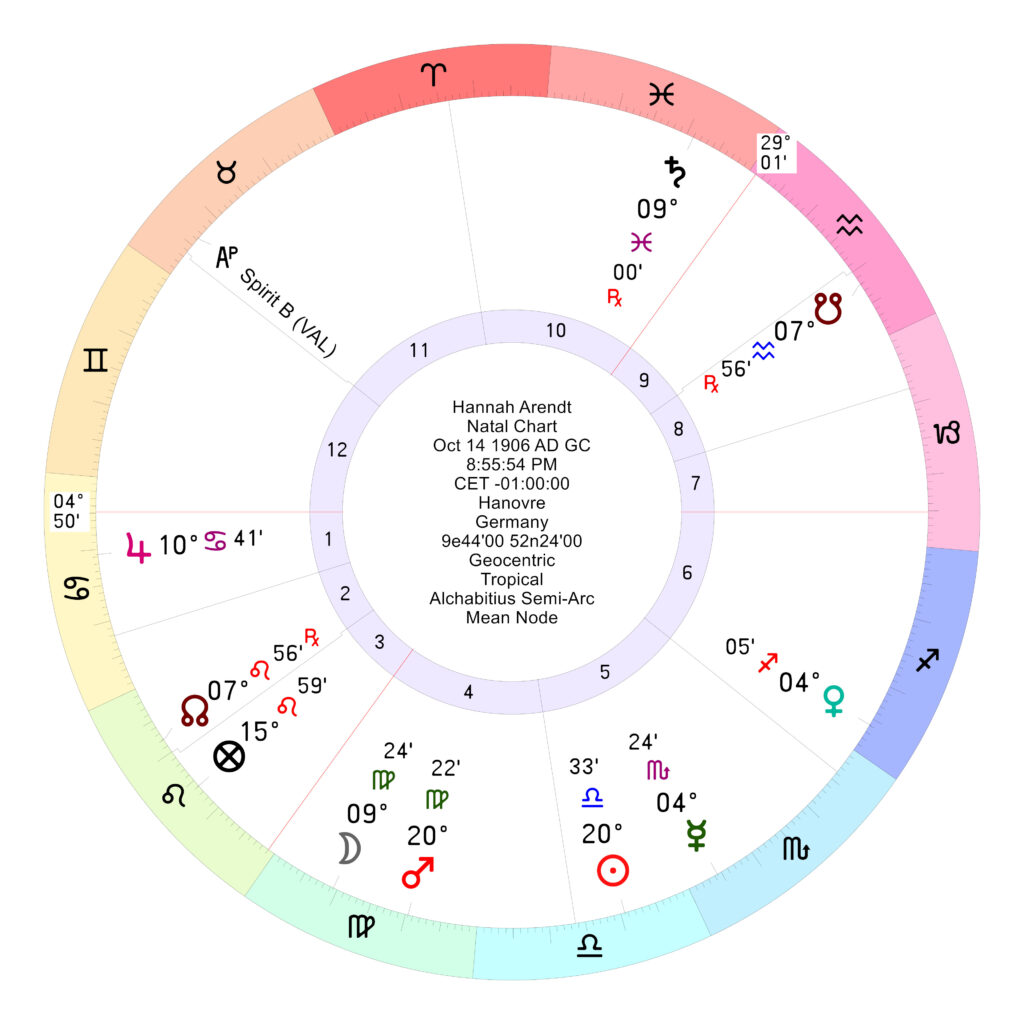
The fourth quadrant house connects Mars with home, homeland, family roots, and the private foundation of life. Mars also rules the IC by bound, strengthening its connection with disruption of home and country.
At the same time, Mars occupies the cadent third whole-sign house. The third house governs journeys, messages, documents, communication, learning, and the immediate environment. As a cadent house, it also carries the idea of falling away from an established position.
During the Mars firdaria, this symbolism became strikingly literal. Arendt was forced away from the European world that had formed her. France became unsafe. Internment followed. Travel became a matter of survival.
The third house was no longer simply the place of reading and writing. Under Mars, it became the road out.
Mars, Mercury, and the Machinery of Crisis
To understand how Mars acts, we also have to consider its rulers.
Mars is in Virgo, the sign of Mercury, and in the bound of Jupiter. Mercury is in Scorpio in the fifth house, a sign ruled by Mars. Mars in Mercury’s sign and Mercury in Mars’s sign therefore form a mutual reception.
This relationship becomes one of the dominant signatures of the period.
Mercury signifies writing, papers, reports, correspondence, teaching, translation, documentation, and administrative work. Its placement in the fifth house brings children and young people into the picture. Mercury also rules Arendt’s twelfth house, linking it with confinement, imprisonment, exile, hidden danger, and suffering.
Mars and Mercury therefore connect many of the themes that repeatedly appear during these seven years: refugee paperwork, children, official notices, transport, internment, escape, journalism, teaching, research, and publication.
Jupiter, the bound ruler of Mars, introduces another influence. Jupiter is exalted in Cancer and casts a superior sextile to Mars. The difficulties of Mars are therefore accompanied by protection, assistance, opportunity, and the possibility of finding a way through crisis.
Mars creates the emergency. Mercury works through information, documents, and words. Jupiter helps open a path through the difficulty.
1938–1939: Refugee Work Returns
The Mars firdaria begins with Arendt returning more fully to practical refugee work.
The November pogroms of 1938 and the worsening situation in Austria and Czechoslovakia brought another wave of Jewish refugees into France. Arendt’s comparatively scholarly period in Paris could no longer remain separate from events.
She worked as a special agent for the Jewish Agency and related organizations, helping with immigration matters for Jewish children and adults trying to enter France.
The work was highly practical. It involved applications, visas, placement, communication with French officials, refugee families, Zionist organizations, and Youth Aliyah networks.
A surviving plan from 1939 concerns the proposed transfer of about fifty Jewish children from German-occupied Czechoslovakia into France. They were to be placed with French families while preparing for eventual emigration.
The Mars–Mercury symbolism is clear. Virgo organizes. Mercury manages documents and communications. Mars acts under pressure. The fifth house introduces children, while Mercury’s rulership of the twelfth places the work within the larger reality of persecution and threatened confinement.
In April 1939, Arendt’s mother Martha left Königsberg and joined Hannah and Heinrich Blücher in Paris. Blücher himself was briefly interned as an enemy alien as the wartime crisis intensified.
Arendt was already stateless. Europe was closing around her.
The Prenatal Syzygy: Rejection and the “Undesirable”
Mars also rules the sign of Arendt’s prenatal syzygy, which falls in Aries in the bound of Venus.
This adds another layer to the period.
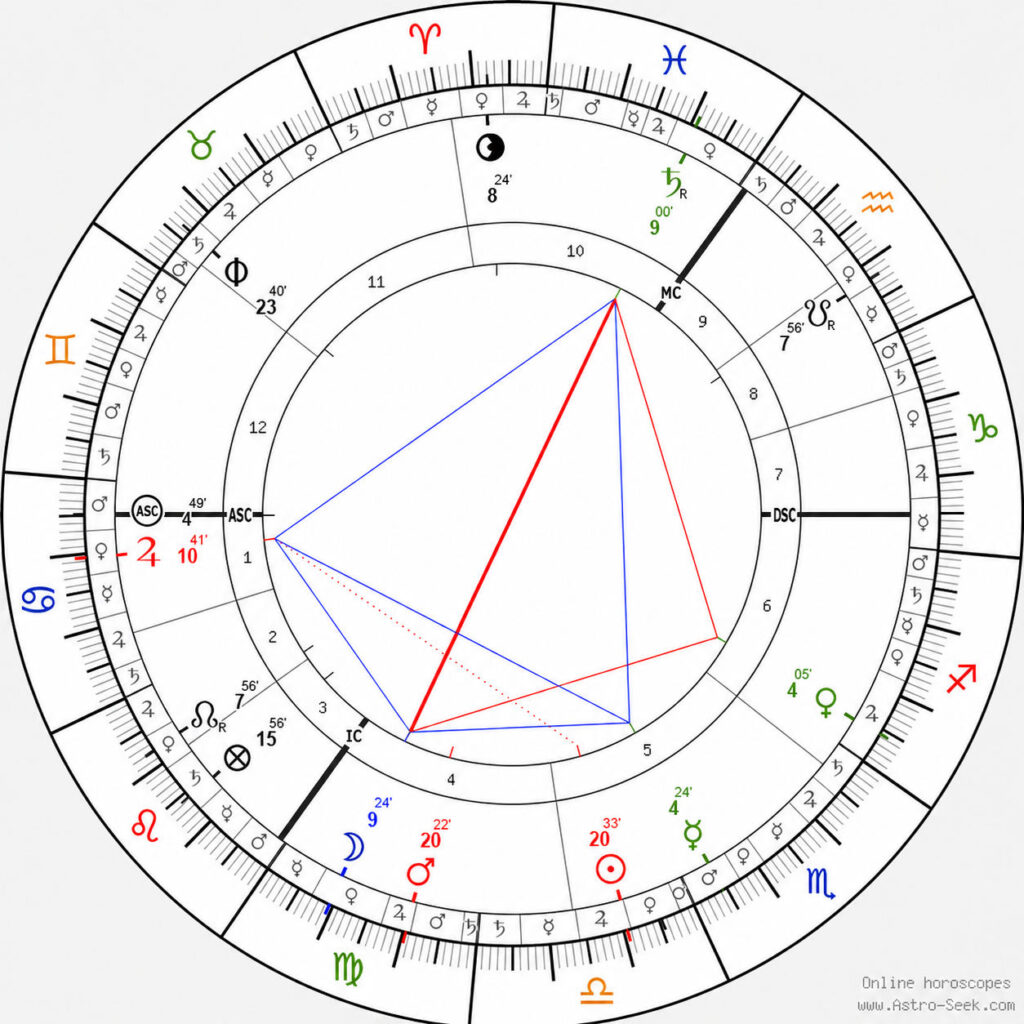
Venus in Aries is in detriment. In this condition, Venus can signify difficulty in matters of acceptance, agreement, harmony, and social bonds. Because the prenatal syzygy falls in Aries, Mars becomes connected with these circumstances.
During the Mars firdaria, Arendt repeatedly encountered rejection in a political form.
She was a Jewish refugee who had already lost German citizenship. Yet when France went to war with Germany, she was classified not simply as a refugee from Hitler but as an enemy alien.
The state that had received her now treated her as undesirable.
Within the interpretive framework used here, the Mars-ruled syzygy in the bound of a debilitated Venus fits themes of political exclusion, rejection, and the breakdown of ordinary social protection.
The symbolism became most visible in 1940.
1940: Internment at Gurs
On 16 January 1940, Arendt married Heinrich Blücher in Paris.
Four months later, her situation changed dramatically.
In early May, French authorities ordered German and Austrian women living in France to report for internment. Many were Jewish refugees who had fled Nazi Germany.
Arendt received the official notice around 5 May. On 15 May, she reported with other women to the Vélodrome d’Hiver in Paris. Eight days later, on 23 May, she was transported by train to Camp Gurs in southwestern France.
The sequence closely reflects the Mars–Mercury configuration: notice, order, registration, transport, classification, and confinement.
At Gurs, Arendt lived for roughly five weeks under primitive conditions. The camp consisted of crude wooden barracks on muddy ground. Sanitation was poor, food inadequate, and privacy almost nonexistent.
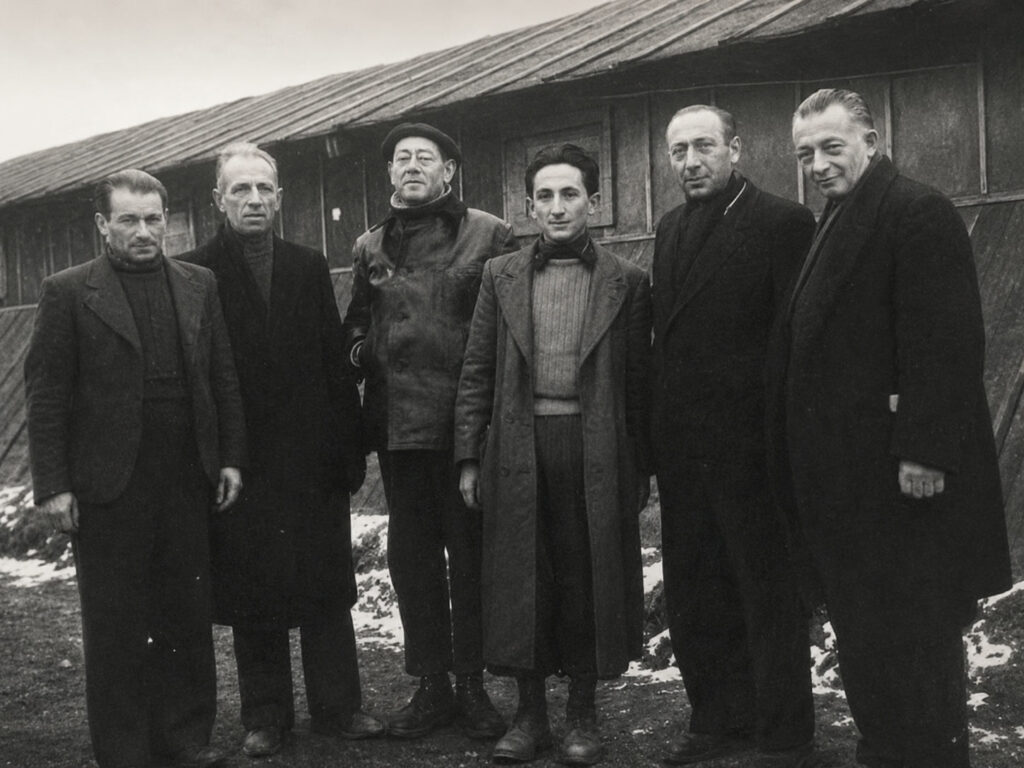
More frightening than the physical hardship was the political uncertainty.
France was collapsing before the German advance, and the women feared that the camp might eventually be handed over to the Nazis.
Arendt later remembered Gurs as one of the worst crises of her life and acknowledged that she had considered suicide during internment.
Several natal testimonies converge here.
Mars in the fourth quadrant house and its bound rulership of the IC connect it with the rupture of home and homeland. Its placement in the cadent third house describes forced movement away from an established place. Mercury, ruler of the twelfth house and in mutual reception with Mars, connects official notices, transport, documentation, and administrative classification with imprisonment.
The Mars firdaria brought these natal themes directly into lived experience.
Escape from Gurs
On 22 June 1940, France signed an armistice with Germany.
In the confusion surrounding the collapse of French administration, controls at Gurs temporarily weakened. Arendt and a relatively small number of women managed to obtain or improvise release papers and leave.
At this point, Jupiter’s role as bound ruler of Mars becomes especially relevant.
Jupiter is exalted in Cancer and casts a superior sextile to Mars. Mars creates the crisis, but its ruler by bound is a strong benefic capable of providing assistance and openings within difficult circumstances.
Arendt left Gurs with almost nothing.
She travelled toward Lourdes, where she met Walter Benjamin. Amid national collapse, the two spent time reading newspapers and playing chess while trying to understand what remained possible.
Arendt later continued to Montauban. There, by chance, she encountered Heinrich Blücher on the street. He too had escaped internment.
Their reunion did not end the danger. They lived in rudimentary rooms, struggled for food, and repeatedly tried to secure the documents needed to leave France.
Again, Mars in Virgo and Mercury dominate the circumstances: roads, letters, visas, applications, border permissions, and movement from one temporary refuge to another.
Walter Benjamin and the Twelfth-House Connection
Walter Benjamin’s presence during these months adds another layer to the Mars period.
Mars rules Arendt’s eleventh house (Aries) of friends, connecting Benjamin with the larger firdaria. Its placement in Virgo in the third house also fits a friendship shaped by travel, news, discussion, and intellectual exchange during displacement.
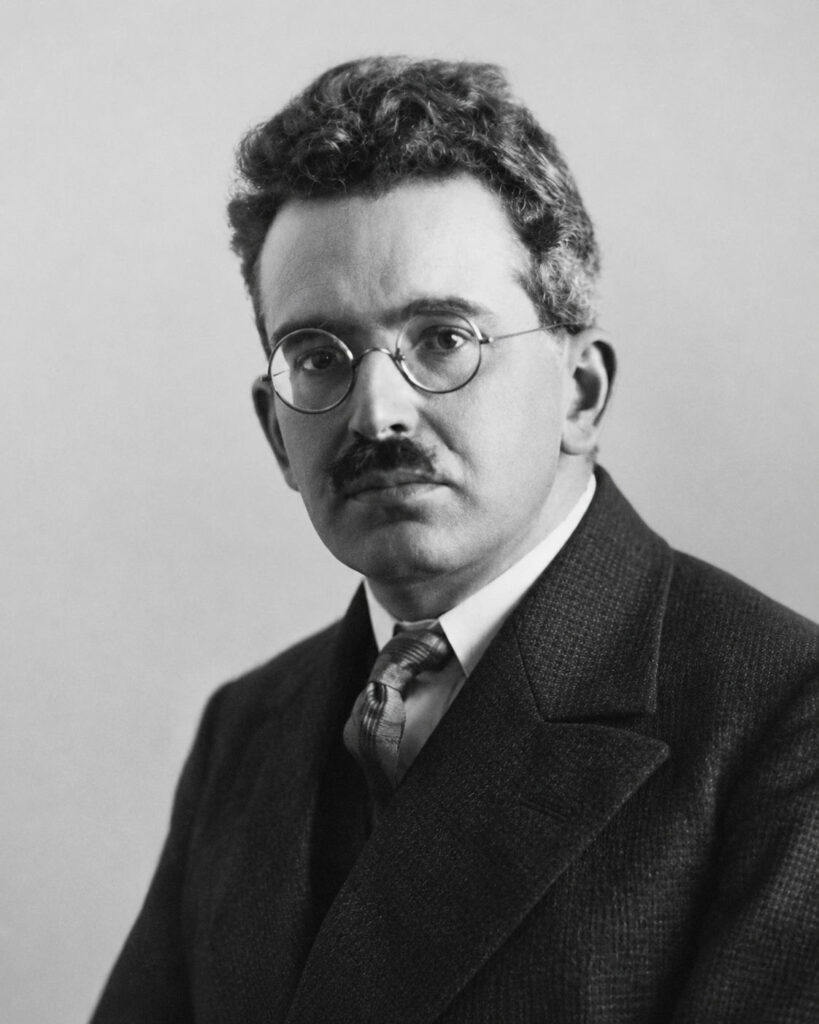
The darker connection comes through Mercury, ruler of Mars by sign. Benjamin attempted to escape through Spain but died by suicide at Portbou in September 1940 after fearing that he would be returned to France. Mercury rules Arendt’s twelfth house of confinement, suffering, exile, and hidden danger, while remaining tied to Mars through mutual reception.
Yet Mercury also signifies writing, preservation, and transmission. Arendt preserved Benjamin’s manuscripts and later helped transmit his work, including the text known as the “Theses on the Philosophy of History.”
This introduces a pattern that continues throughout the Mars firdaria: destruction is repeatedly answered with documentation, memory, writing, and preservation.
From France to New York
By late 1940, Arendt and Blücher were making repeated journeys to Marseille in search of exit visas and passage out of Europe.
Their successful escape occurred during the Mars/Venus subperiod, from 14 October 1940 to 14 October 1941. Venus, as the benefic minor time-lord, introduced a softer influence within the larger Mars period, while Jupiter’s rulership of Mars by bound added another layer of support.
In January 1941, Arendt and Blücher finally left France and travelled by train through Spain to Lisbon.
Lisbon was crowded with refugees waiting for passage across the Atlantic. For stateless people, every stage depended on documents, stamps, transit permissions, money, assistance, and luck.
On 10 May 1941, Arendt and Blücher sailed aboard the S.S. Guiné II. They arrived in New York on 22 May.
The next day, Arendt sent a telegram to Günther Anders:
“SIND GERETTET” — “We are saved.”

The Mars firdaria had carried her from Paris to internment, from Gurs to Montauban, and finally through Spain and Portugal to the United States.
The symbolism of the cadent third house is especially vivid here: repeated journeys carried her away from an established home until another place of safety could be reached.
Learning, Journalism, and the Mars–Mercury Reception
The second half of the Mars firdaria looks very different from the first.
The immediate physical danger decreased after Arendt reached the United States, but Mars did not disappear. Its energy moved increasingly into writing, advocacy, teaching, research, and political argument.
Arendt arrived with limited English. During the summer of 1941, she spent about two months in Winchester, Massachusetts, in an immersion arrangement designed to improve her language skills.
This provides another expression of Mars in Virgo in the third house: concentrated effort directed toward acquiring a practical language.
By October 1941, she was writing for the German-language Jewish newspaper Aufbau.
Her regular column, “This Means You,” argued that Jews should organize politically and form a Jewish army to fight alongside the Allies. The themes are strongly Martian: war, political self-defense, courage, organization, and resistance to passivity.
On 28 November 1941, she published “Active Patience.”
The title itself captures something of the Mars–Jupiter relationship. Mars contributes action and persistence; Jupiter, as bound ruler and superior benefic, adds perspective and purpose.
Arendt argued for sustained political effort even when immediate success appeared unlikely. Political action required neither passive waiting nor reckless movement, but disciplined persistence.
The Dreyfus Affair: Mars in Virgo Through Research
The timing becomes particularly clear during the Mars/Mercury subperiod, from 14 October 1941 to 14 October 1942.
During this year, the natal Mars–Mercury mutual reception was activated through language, journalism, teaching, research, documents, and historical analysis.
Arendt improved her English, wrote regularly for Aufbau, and in the summer of 1942 received her first American teaching appointment at Brooklyn College, where she taught Modern European History.
Her opening material dealt with the Dreyfus Affair.
That same year she published the substantial essay “From the Dreyfus Affair to France Today.”
The subject fits the natal configuration particularly well. Alfred Dreyfus was a military officer falsely convicted of passing military secrets. The case revolved around documents, handwriting analysis, evidence, military institutions, secrecy, accusation, imprisonment, and exile.
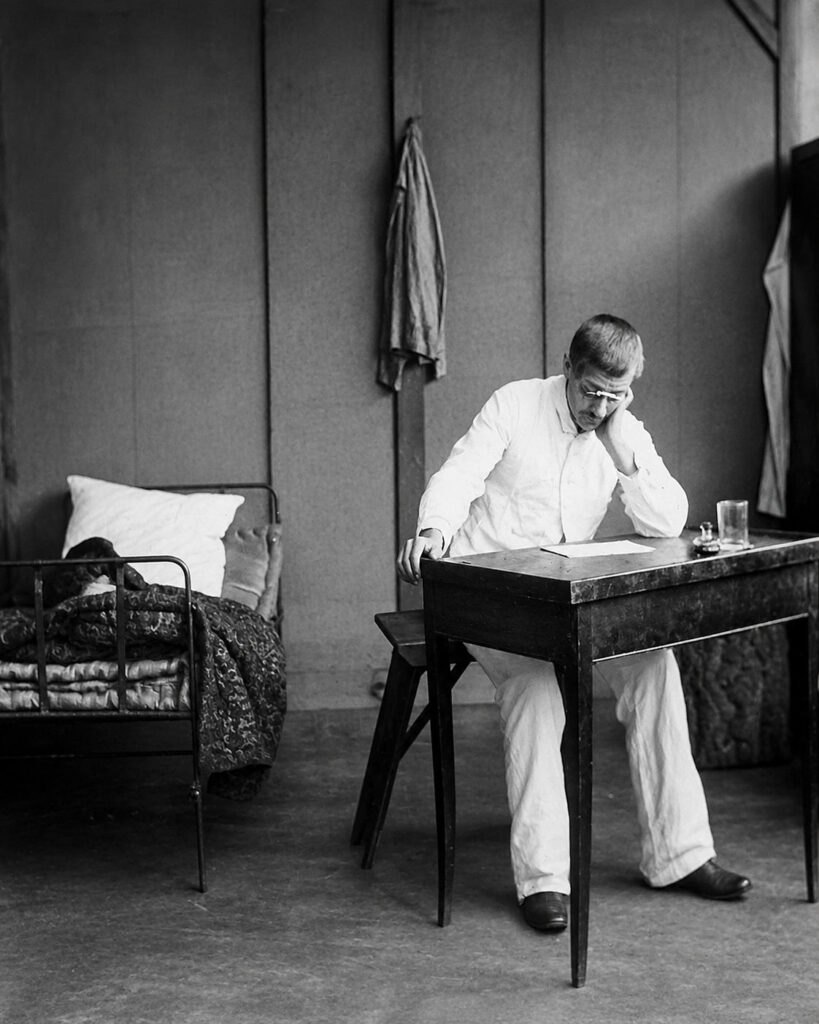
Mars supplies the military setting and conflict. Virgo contributes detailed examination. Mercury governs the documents and evidence, while its rulership of the twelfth house connects the story with imprisonment and exile.
Arendt used the Dreyfus Affair to investigate a larger political problem: how antisemitism could develop from social prejudice into organized mass politics, and how legal equality could collapse when institutions placed their own interests above justice.
The essay later became part of The Origins of Totalitarianism.
Mars had once placed Arendt inside the machinery of persecution. During the Mars/Mercury subperiod, she increasingly began to examine that machinery through research and writing.
“We Refugees”: The Moon Meets Mars
The next subperiod, Mars/Moon, ran from 14 October 1942 to 14 October 1943.
In January 1943, Arendt published “We Refugees.”
Few texts from this period express the natal Moon–Mars relationship more directly.
The Moon and Mars are together in Virgo in the third whole-sign house and fourth quadrant house. The Moon signifies people, memory, belonging, emotional experience, and the conditions of life. Mars signifies severance, conflict, displacement, and exclusion.
The title itself almost captures the configuration:
“We” — the Moon.
“Refugees” — Mars.
The essay grows out of lived experience.
Arendt describes a new kind of refugee: people driven from their homes not because of political acts they had committed, but because of who they were. They lost professions, language, citizenship, social position, and legal identity.
She also reflects on the bitter paradox exposed by her own experience: Jews could be placed in concentration camps by their enemies and internment camps by their friends.
With the Moon activated as the minor time-lord, the natal Moon–Mars conjunction comes strongly to the foreground. The Moon brings collective experience, memory, and belonging; Mars brings displacement, exclusion, and the rupture of home.
The essay also develops the figure of the conscious pariah: the outsider who refuses to erase identity simply to gain acceptance.
Here Jupiter again modifies Mars. Personal displacement becomes material for wider political understanding.
Research, Recovery, and the Work of Mars in Virgo
The Mars/Saturn subperiod ran from 14 October 1943 to 14 October 1944.
In 1944, Arendt took her first full-time salaried position in New York as research director for the Conference on Jewish Relations and its Commission on European Jewish Cultural Reconstruction.
Saturn rules Arendt’s Midheaven, directly connecting the subperiod with career and public work. Natal Saturn is retrograde in Pisces in the ninth house and, following the retrograde principle used in this analysis, can also express Virgo-like qualities of classification, organization, and close intellectual labor.
This provides a fitting background for Arendt’s new research position.
Her work involved locating, identifying, documenting, and eventually recovering Jewish libraries, archives, ritual objects, and other cultural property looted by the Nazis.

Mars in Virgo is relevant here as well. Mars signifies what has been seized, scattered, damaged, or taken by force. Virgo organizes fragments. Mercury records and classifies. The fourth-quadrant connection returns the work to questions of cultural roots, homeland, and what remains after a community has been torn apart.
The task was more than academic research.
It was reconstruction after destruction.
The Essays of 1945
The final year of the Mars firdaria fell under the Mars/Jupiter subperiod, from 14 October 1944 to 14 October 1945.
By 1945, Arendt’s wartime experience had begun to crystallize into a broader political analysis.
She published essays including “Approaches to the ‘German Problem,’” “The Stateless People,” “The Assets of Personality,” “Dilthey as Philosopher and Historian,” “Zionism Reconsidered,” and “Christianity and Revolution.”
Across these writings, several themes recur. Arendt rejects simple explanations based on supposedly eternal national character. She analyzes statelessness as a political condition rather than merely a personal misfortune. She questions forms of nationalism that create new excluded populations and searches for political arrangements capable of preserving plurality.
These questions were no longer abstract.
Arendt had been arrested, interned, classified, displaced, deprived of citizenship, and forced across borders.
The Mars/Jupiter subperiod gives the relationship between experience and interpretation particular emphasis. Jupiter is both the natal bound ruler of Mars and the minor firdaria ruler during this final year.
The material came from Mars: war, displacement, internment, conflict, and statelessness. Jupiter helped broaden those experiences into political understanding.
Saturn Behind the Problem of Statelessness
A final natal connection helps place the Mars firdaria within the larger direction of Arendt’s life.
Her Midheaven is in Aquarius, ruled by Saturn. The Midheaven signifies career, public standing, reputation, authority, and the native’s relationship with larger structures of power.
Saturn itself is retrograde and peregrine in Pisces in the ninth house and is the out-of-sect malefic.
The Lot of Fortune also falls in Leo in the bound of Saturn. Following Doctor H’s research, the Saturn–Leo combination is treated here as a significator connected with totalitarianism.
This brings Saturn into questions of government, law, public status, authority, and the circumstances imposed upon the native.
During these years, Arendt’s statelessness was not merely private misfortune. It resulted from political institutions and government action.
The German state had stripped her of citizenship. The French state later interned her as an enemy alien. Her legal status determined where she could live, whether she could travel, what work she could perform, and how governments classified her.
Saturn’s rulership of the Aquarius Midheaven therefore connects her public path with institutions and political systems capable of granting or denying belonging. The Lot of Fortune in Saturn’s bound shows how deeply such structures affected the material circumstances of her life.
Mars made the experience immediate. Saturn gave it institutional form.
This helps explain why Arendt’s later work could move beyond autobiography. Her own experience became a way of investigating a larger political problem: what happens when governments possess the power to remove people from the political world itself?
The North Node in Leo, close to the Lot of Fortune, points toward the next firdaria, when questions of statelessness, totalitarianism, and political belonging would develop even further.
Conclusion: Crisis Turned into Political Understanding
The Mars firdaria was the most physically dangerous period of Hannah Arendt’s life to that point. Home became unstable. Governments classified her as unwanted. She was interned, escaped, crossed borders, waited for visas, and eventually reached the United States.
Yet the same planetary configuration that describes crisis also describes how she responded to it.
Mars in Virgo worked through documents, research, argument, and practical action. Its mutual reception with Mercury connected imprisonment and exile with writing, teaching, journalism, and publication. Jupiter, as bound ruler of Mars, repeatedly brought protection and the possibility of drawing wider meaning from difficult experience.
By the end of the period, Arendt was still stateless, but she was no longer merely living through statelessness. She was beginning to explain its political meaning.
The refugee, the pariah, the collapse of legal protection, nationalism, and the vulnerability of people without a political home had become central subjects of her work.