
14 October 1926 to 14 October 1938
Hannah Arendt’s Jupiter firdaria covers the twelve years from age twenty to thirty-two. It begins with a young doctoral student at Heidelberg and ends with a stateless refugee in Paris, studying antisemitism after arrest, exile, and years of practical work on behalf of Jewish refugees.
The transition from Saturn to Jupiter is important in Arendt’s chart. During the Saturn firdaria, the foundations of her intellectual life were laid through disciplined study, theology, philosophy, and her encounters with Martin Heidegger and Karl Jaspers. With Jupiter becoming the principal time-lord, those foundations began to expand into publication, relationships, wider experience, and eventually political engagement.
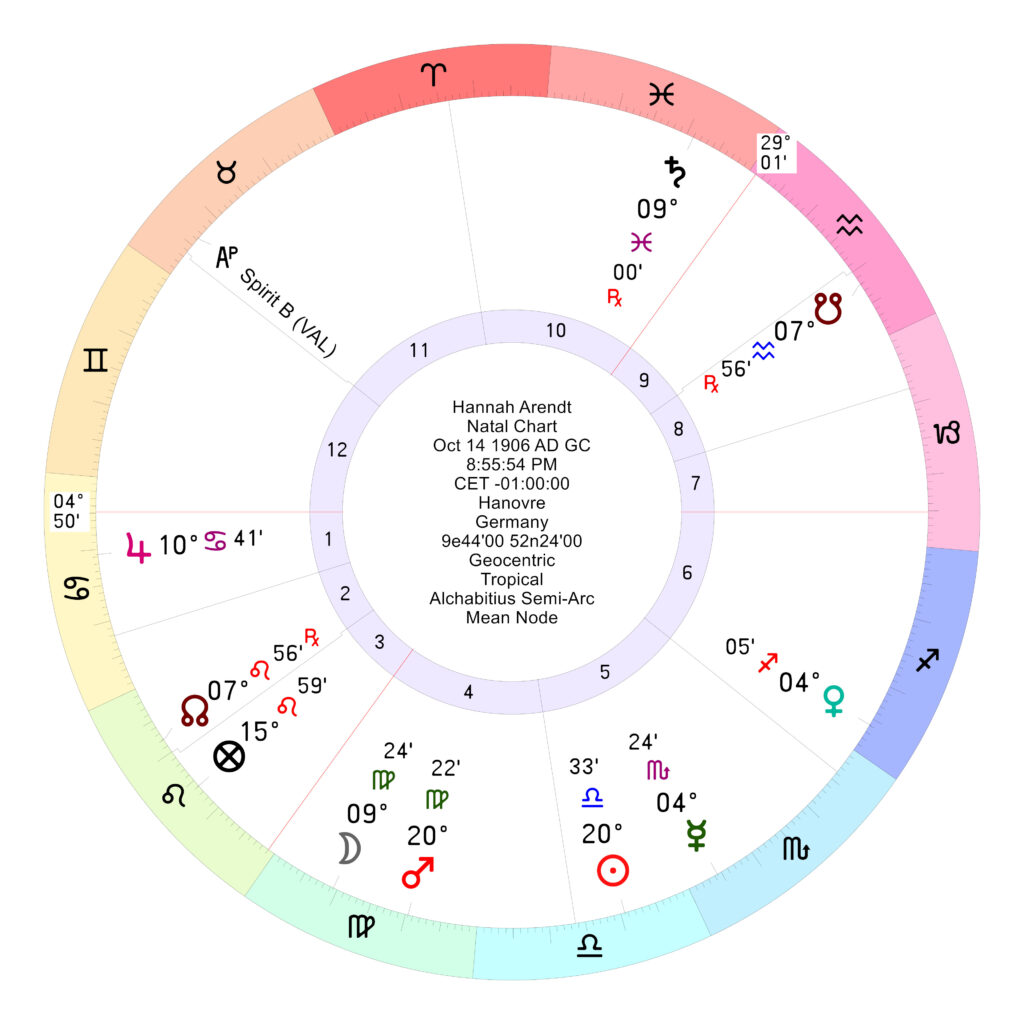
Jupiter is one of the strongest planets in Arendt’s chart. It is exalted in Cancer and placed in the angular first house. The Moon receives Jupiter because Jupiter occupies the Moon’s domicile, creating a strong relationship between the two planets. Jupiter is also the Victor of the chart.
Its influence extends into several important areas of the nativity. Jupiter rules Pisces, where Saturn is placed in the ninth house, and Sagittarius, where Venus is placed in the sixth. It also rules the bounds occupied by the Sun and Mars. Jupiter therefore connects higher learning and philosophy through Saturn, love and practical service through Venus, and action and conflict through Mars.
The Moon’s natal sequence adds another layer to the period. The Moon separates from Saturn, applies to a sextile with Jupiter, and later reaches Mars. The Saturn years had formed Arendt through discipline and difficulty. The Jupiter years initially brought education, publication, important relationships, and intellectual growth. As the period developed, however, political danger increasingly forced thought into action.
The Jupiter firdaria became the period in which Hannah Arendt moved from academic philosophy toward the political questions that would define her mature work.
Jupiter in Cancer: Expansion and the Human World
Jupiter in Cancer in the first house has considerable essential and accidental strength. It is exalted, angular, and closely connected with Arendt’s life, identity, and overall direction.
Because Jupiter occupies the Moon’s domicile, its significations are tied closely to the Moon, which rules Arendt’s Ascendant. Themes of protection, nourishment, belonging, education, and guidance therefore become especially important during the period.
These themes gradually expanded beyond Arendt’s personal development. Her work increasingly turned toward questions of human relationship and political belonging: how individuals exist within communities, what happens when membership in those communities is denied, and how people become isolated or excluded from the political world around them.
Such questions would later become central to works including The Origins of Totalitarianism, The Human Condition, and On Revolution. During the Jupiter firdaria, however, they first emerged from philosophy and then became inseparable from Arendt’s own historical experience.
Heidelberg: The Doctorate and the Problem of Love
The period opens in Heidelberg, where Arendt continued her doctoral work under Karl Jaspers. Their intellectual and personal friendship deepened and would remain one of the most important relationships of her life.
In November 1928, she received her doctorate in philosophy. Her dissertation was published the following year as The Concept of Love in Augustine: An Attempt at a Philosophical Interpretation.
The subject fits the planetary structure of the period particularly well.
Jupiter rules Saturn in Pisces in the ninth house of philosophy, theology, higher learning, and teachers. It also rules Venus in Sagittarius in the sixth house. Venus signifies love, attraction, relationship, and connection. Venus is in the tenth sign from Saturn and overcomes it by square, bringing the subject of love into close relationship with Saturn’s philosophical and theological concerns.
Both planets ultimately answer to Jupiter.
Arendt examined Augustine through several forms of love: desire, the relationship between creator and creature, and love of one’s neighbor. Her concern was not merely theological. She was already asking what kind of relationship human beings can have with one another and with the world they inhabit.
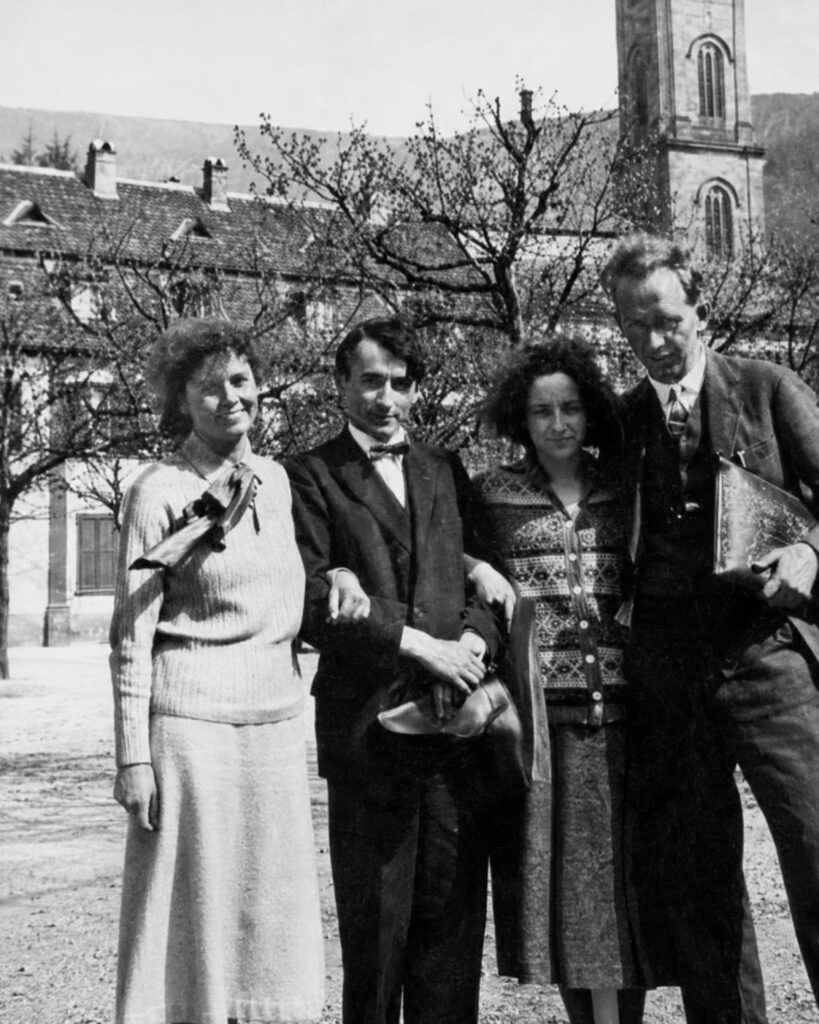
A tension appears here that would remain important throughout her work. If salvation requires withdrawal from particular people and worldly attachments, what becomes of genuine human community?
Arendt would later place far greater emphasis on plurality, the shared world, and amor mundi, the love of the world. Her Augustine dissertation does not yet contain her mature political philosophy, but it introduces questions she would continue to develop for decades.
Marriage and the Wandering Years
In January 1929, Arendt renewed her acquaintance with the philosopher Günther Stern, later known as Günther Anders. Their relationship developed quickly, and on 26 September 1929 they married at the town hall in Nowawes, near Potsdam.

Both had studied with Heidegger and shared philosophical interests, but their marriage soon entered a period of professional uncertainty. They lived successively in Potsdam, Heidelberg, Frankfurt, and Berlin while trying to establish themselves academically.
Arendt later regarded these as wandering years.
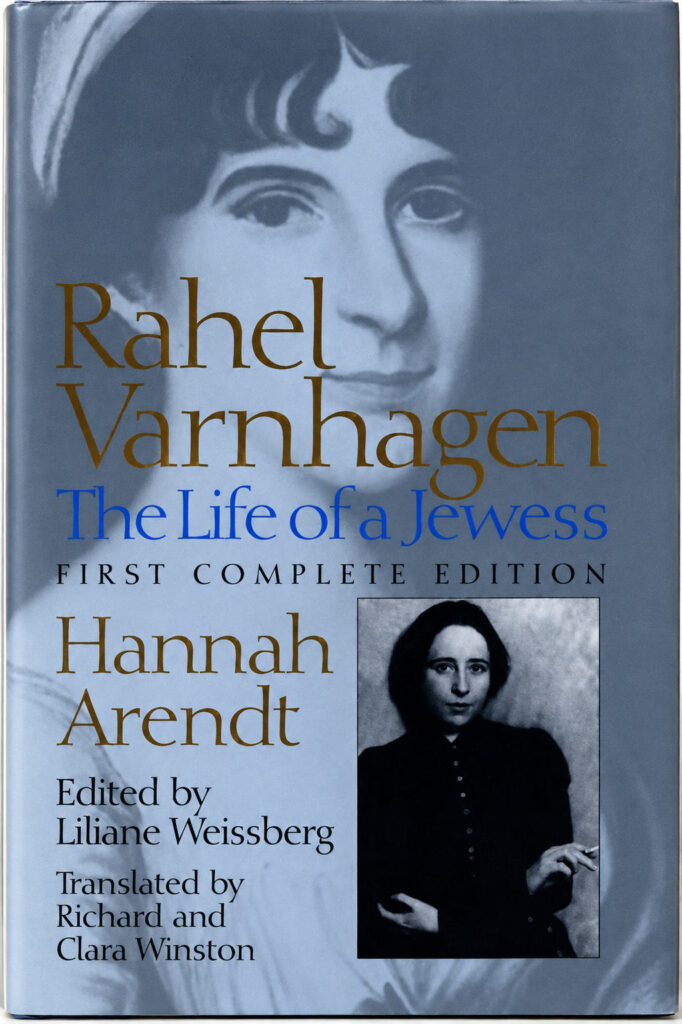
At the same time, her research began to change direction. The Augustine dissertation had examined love and the relationship between the individual and the world. Her next major subject brought these questions closer to her own historical circumstances: the life of the German-Jewish salonnière Rahel Varnhagen and the problem of Jewish assimilation.
From Philosophy to the Jewish Question
In 1930 and 1931, Arendt received support from the Notgemeinschaft der Deutschen Wissenschaft for a Habilitation project centered on Varnhagen.
She was also publishing widely. On 12 April 1930, she published “Augustine and Protestantism.” She wrote on Karl Mannheim’s Ideology and Utopia and, with Günther Stern, produced an essay on Rilke’s Duino Elegies.
Her intellectual interests remained broad, but the political world around her was changing rapidly.
The economic and political crisis of the Weimar Republic deepened, and the Nazi Party made dramatic gains in the September 1930 elections. Antisemitism could no longer be approached only as a historical or philosophical question. It was becoming an immediate political reality.
Arendt’s work on Rahel Varnhagen consequently acquired greater urgency. Varnhagen had sought entry into German society through education, culture, relationships, and assimilation. Yet her Jewish origin remained an identity that society continued to impose upon her.
Arendt increasingly confronted the contradiction at the center of assimilation: what happens when a person attempts to leave behind an identity that the surrounding society refuses to forget?
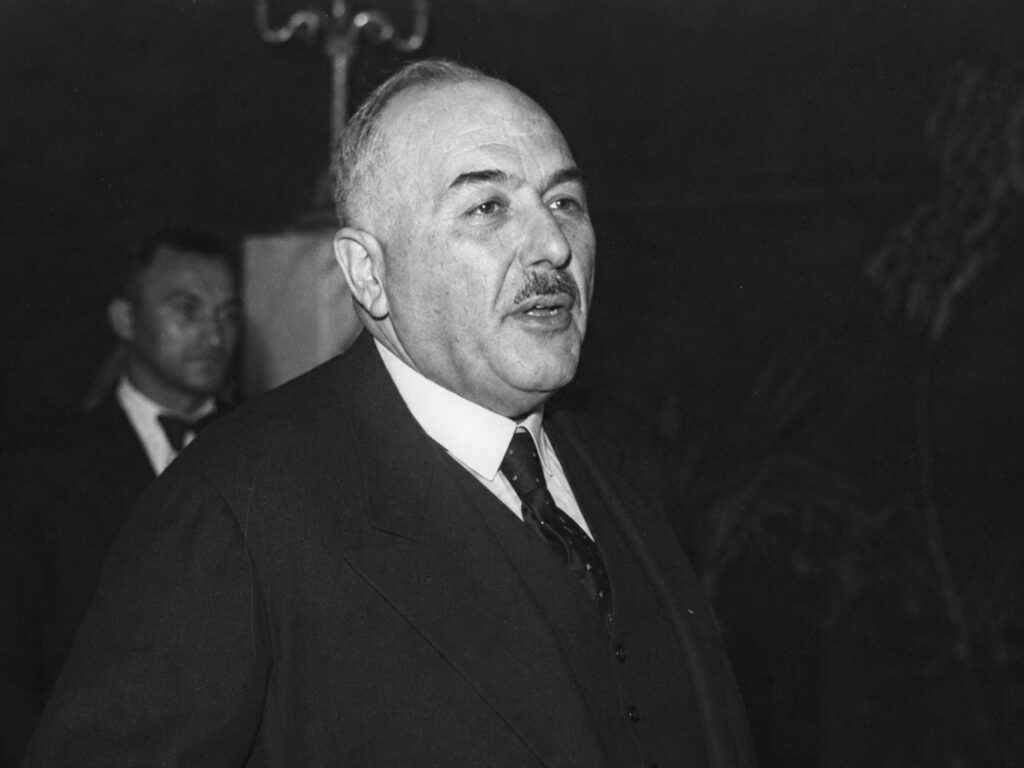
Her friendship with Kurt Blumenfeld, a leading German Zionist, helped sharpen the question. Arendt did not simply adopt a party doctrine. What mattered was the recognition that Jewish identity had become an unavoidable political fact.
If a person was attacked as a Jew, abstract claims to universal humanity might no longer be sufficient.
Mars Enters the Story
As the Jupiter firdaria developed, Mars became increasingly important.
The Moon applies to Mars after its sextile with Jupiter, while Jupiter rules the bound occupied by Mars. Mars is therefore connected to the Jupiter period while representing the next stage in the Moon’s natal sequence.
Mars signifies conflict, danger, severance, struggle, and the need for decisive action. The Imum Coeli also falls in the bound of Mars, linking the planet with home, homeland, roots, and belonging.
Mars is in Virgo, where action is expressed through analysis, information, organization, and detailed work. These themes became increasingly visible as Arendt’s intellectual concerns moved toward contemporary politics.
In 1932, she published “The Enlightenment and the Jewish Question.” The essay marks an important transition. She was no longer writing only as a philosopher concerned with abstract problems. She was examining the political condition of Jews within European society.
She questioned the belief that education, universal reason, and cultural assimilation could by themselves resolve the Jewish question. Jews could become secular, educated, and culturally German while remaining politically vulnerable.
The historical problem was moving closer to her own life.
1933: The End of the Spectator
The decisive break came after the Reichstag fire on 27 February 1933.
The arrests that followed profoundly affected Arendt. Looking back in 1964, she identified this moment as the point at which she could no longer remain merely a spectator.
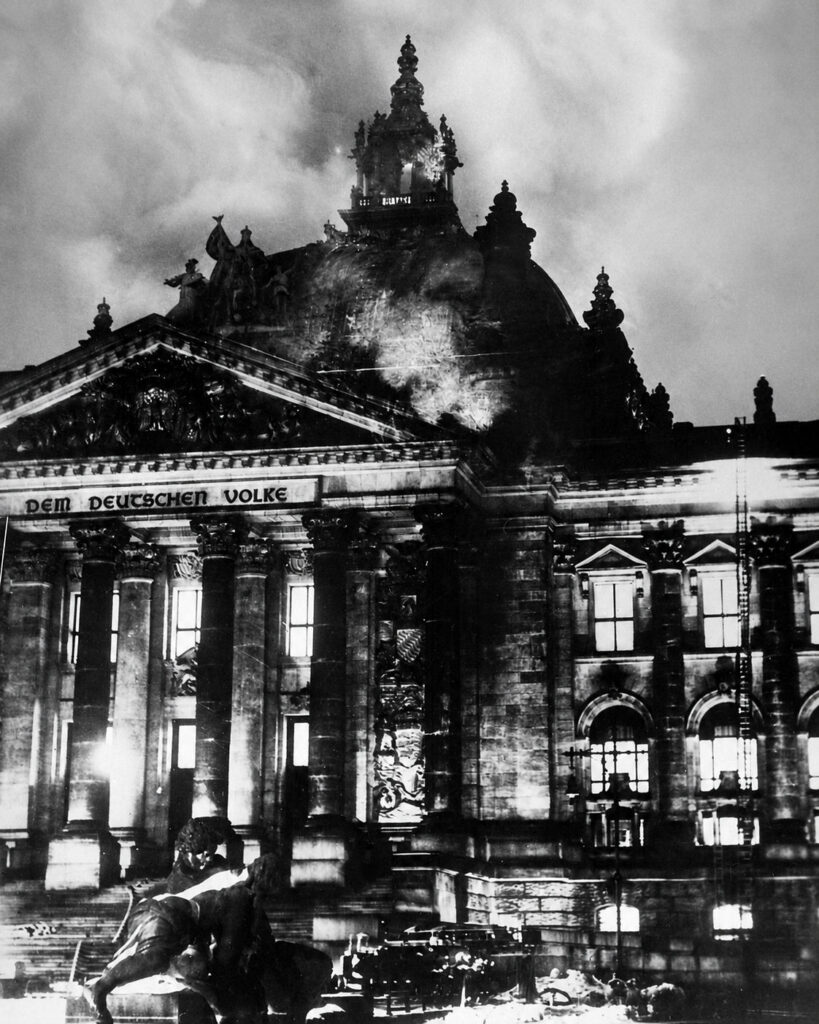
The Nazi government suspended civil liberties and began arresting political opponents. Arendt’s husband left Germany for Paris, but she initially remained in Berlin.
She began helping people who were in danger and allowed her apartment to serve as a temporary refuge for those attempting to escape.
More importantly, Kurt Blumenfeld and the German Zionist Organization asked her to collect examples of antisemitic propaganda.
The work was illegal.
Arendt searched newspapers, professional journals, teachers’ publications, organizational material, and other sources in the Prussian State Library. The purpose was to demonstrate to foreign audiences that antisemitism was not confined to Nazi speeches. It had entered ordinary institutions and professional life.
The symbolism of Mars in Virgo is especially appropriate here: dangerous work carried out through reading, classification, documentation, and the careful collection of evidence.
The philosopher had become an investigator.
Arrest and Flight from Germany
In July 1933, Arendt and her mother were arrested by the Gestapo.
Arendt was interrogated and detained for about eight days. Police examined her notes and manuscripts, some of which included Greek quotations and philosophical material that confused her interrogators.

Another natal relationship becomes relevant here. Mars is in mutual reception with Mercury: Mars occupies Mercury’s sign Virgo, while Mercury is in Mars’s sign Scorpio. Mercury also rules Arendt’s twelfth house of imprisonment, confinement, exile, and hidden enemies.
The symbolism closely matches the circumstances. Research, documents, and information had brought her into direct contact with political danger and detention.
Arendt was eventually released, an outcome she later regarded as extraordinary luck.
After the arrest, remaining in Germany was no longer possible.
She and her mother crossed illegally through the Ore Mountains into Czechoslovakia, travelled through Prague and Geneva, and eventually reached Paris.
The Jupiter firdaria had opened with doctoral study in Heidelberg. Seven years later, Arendt was a refugee.
Exile and the Collapse of Assimilation
Arendt carried the manuscript of her Rahel Varnhagen biography into exile.
The parallel was difficult to ignore. She had been writing about a Jewish woman who sought acceptance within German culture. Arendt herself had now been expelled from the German intellectual world in which she had been educated.
A historical problem had become a lived experience.
Exile also changed the character of her work. Pure scholarship could no longer remain her primary concern. She had to support herself, while the growing refugee crisis demanded practical assistance.
This brings another part of Jupiter’s rulership into focus: Venus in Sagittarius in the sixth house.
The sixth house signifies work, service, necessity, and difficult circumstances. Venus introduces cooperation, relationships, care, and assistance. Because Jupiter rules Venus, such work could take on a broader social and ethical purpose.
Youth Aliyah and Practical Service
After briefly working as a secretary for the writer Arnold Zweig, Arendt became involved with Agriculture et Artisanat.
She helped young German-Jewish refugees prepare for emigration to Palestine through agricultural and vocational training. The work required education, administration, documents, visas, clothing, negotiation, and constant practical organization.
In 1935, she helped establish the French section of Youth Aliyah. By 1936, the Paris office had assisted around 120 young people in emigrating to Palestine.

Arendt herself spent about three months in Palestine in 1935 in connection with this work.
This was a very different form of education from Heidelberg.
Instead of philosophical seminars, she dealt with displaced families, young refugees, immigration documents, bureaucratic obstacles, and the practical problem of helping people reach safety.
The Mars-Mercury mutual reception remains relevant. Mercury signifies youth, information, writing, and documents; Mars introduces urgency, danger, and action. The same planetary relationship connected with illegal research and arrest now appears through administration and practical assistance for refugees.
Jupiter gives these activities a wider purpose. Knowledge is no longer only something to acquire. It becomes something that can be used to guide and protect others.
Heinrich Blücher and a New Partnership
Arendt’s marriage to Günther Stern gradually deteriorated, and they separated in 1936. Around the same period, she met Heinrich Blücher in Paris.
Blücher came from a very different intellectual world from Heidegger or Jaspers. He was a political autodidact and former Communist activist rather than a university professor. Their relationship became both romantic and intellectual, and their discussions drew Arendt more deeply into questions of political action, revolution, history, and power.

The Sun is one of the traditional significators of the husband in a woman’s nativity. In Arendt’s chart, the Sun is in Libra in the bound of Jupiter and is placed in the fifth quadrant house, connecting it with romantic relationships. During the Jupiter firdaria, Jupiter therefore has another link to partnership matters through its rulership of the Sun’s bound.
This symbolism fits the emergence of Blücher particularly well. Jupiter once again expanded Arendt’s world through an important relationship, but this partnership differed sharply from her earlier affair with Heidegger. Blücher brought political experience, historical perspective, and sustained intellectual companionship into her life. With him, Arendt increasingly found a partnership based on conversation and greater equality, one that would become an important part of the development of her political thought.
Statelessness and the Return to Scholarship
In 1937, Arendt divorced Günther Stern.
Around the same period came a more consequential loss: she was deprived of German citizenship and became stateless.
She would remain without citizenship for nearly fourteen years.
The experience later became central to her understanding of political rights. Statelessness was not merely the loss of a passport. It exposed what could happen when a person no longer belonged to a political community capable of recognizing and guaranteeing rights.
The philosophical problem of belonging had become a condition of her own life.
During 1937 and 1938, Arendt reduced much of her practical organizational work and returned more fully to scholarship. She completed the later chapters of the Rahel Varnhagen manuscript, developed the distinction between the pariah and the parvenu, and began more systematic research into the history of antisemitism.
She also lectured on antisemitism in Paris.
The intellectual path that would eventually lead toward The Origins of Totalitarianism was beginning to take shape.
Yet scholarship could not remain separate from political events. The Anschluss of Austria in March 1938, the Sudeten crisis, and the growing number of Jewish refugees again made questions of immigration and rescue urgent.
By the closing months of the Jupiter firdaria, political thought and practical action had become increasingly difficult to separate.
Conclusion: From Philosophy to Political Thought
The Jupiter firdaria widened the scope of Arendt’s life and thought. What began with scholarship, publication, and philosophical study gradually became a direct confrontation with antisemitism, exile, refugee work, and statelessness.
The Rahel Varnhagen project captures this transformation especially well. Arendt began by examining German-Jewish assimilation as a historical problem. By the time she completed the work in exile, that problem had become part of her own experience.
Jupiter’s role was therefore less about simple good fortune than the expansion of experience. Her intellectual world grew larger as philosophy was increasingly forced into contact with political reality.
By October 1938, Arendt was living in Paris as a stateless refugee. The academic path she had once expected was gone, but the central questions that would shape her mature work—belonging, exclusion, political responsibility, and the conditions of a shared human world—were already taking form.