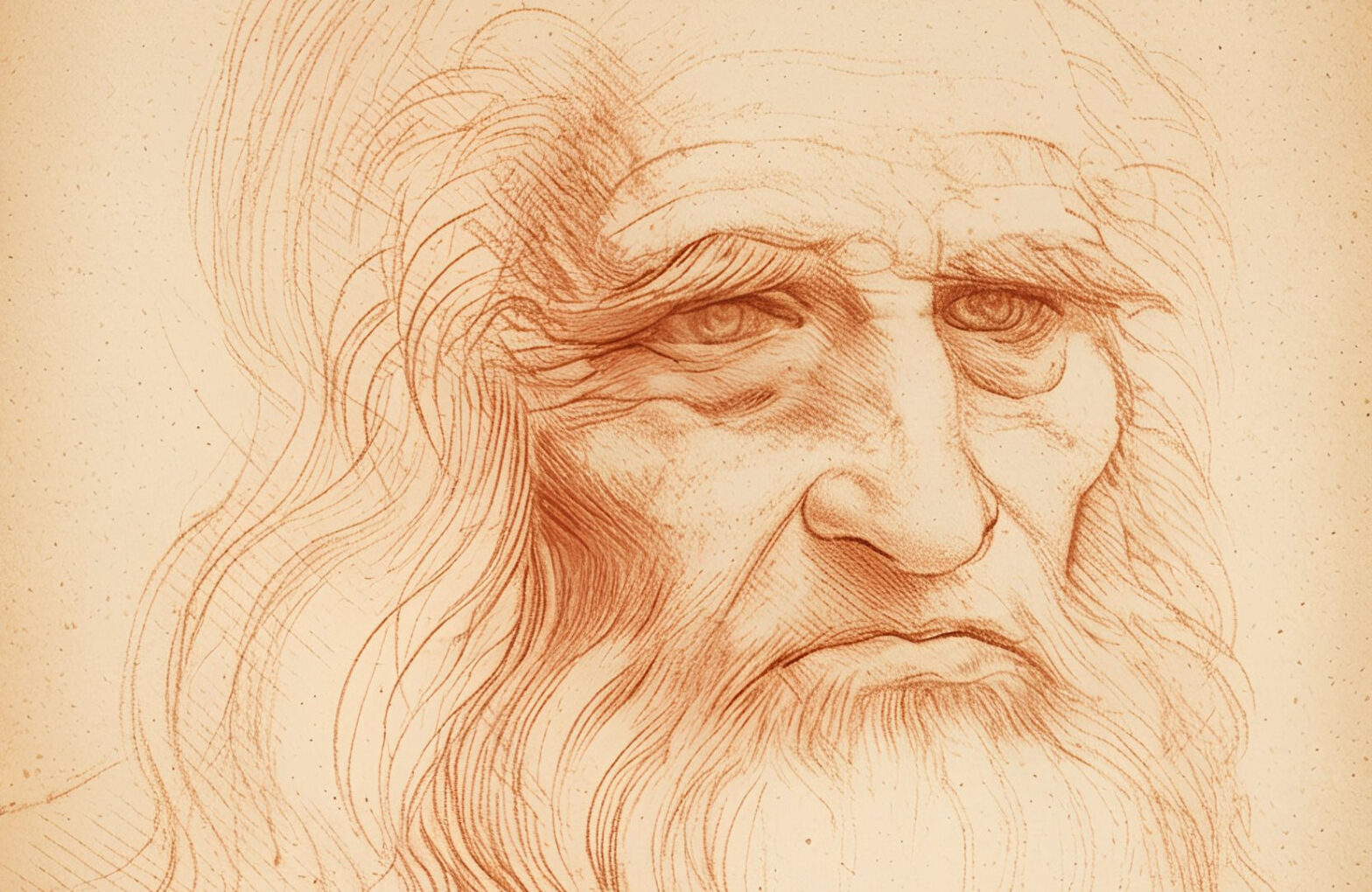
Leonardo da Vinci was born on 15 April 1452 near the hill town of Vinci in Tuscany, outside Florence. He was the illegitimate son of a Florentine notary, Ser Piero da Vinci, and a lower-class woman, Caterina. Even so, his birth was treated as a happy event. Two days later he was baptised in the church of Santa Croce in Vinci, in a public ceremony with about ten godparents, a sign that his arrival was welcomed and honoured by the local community.
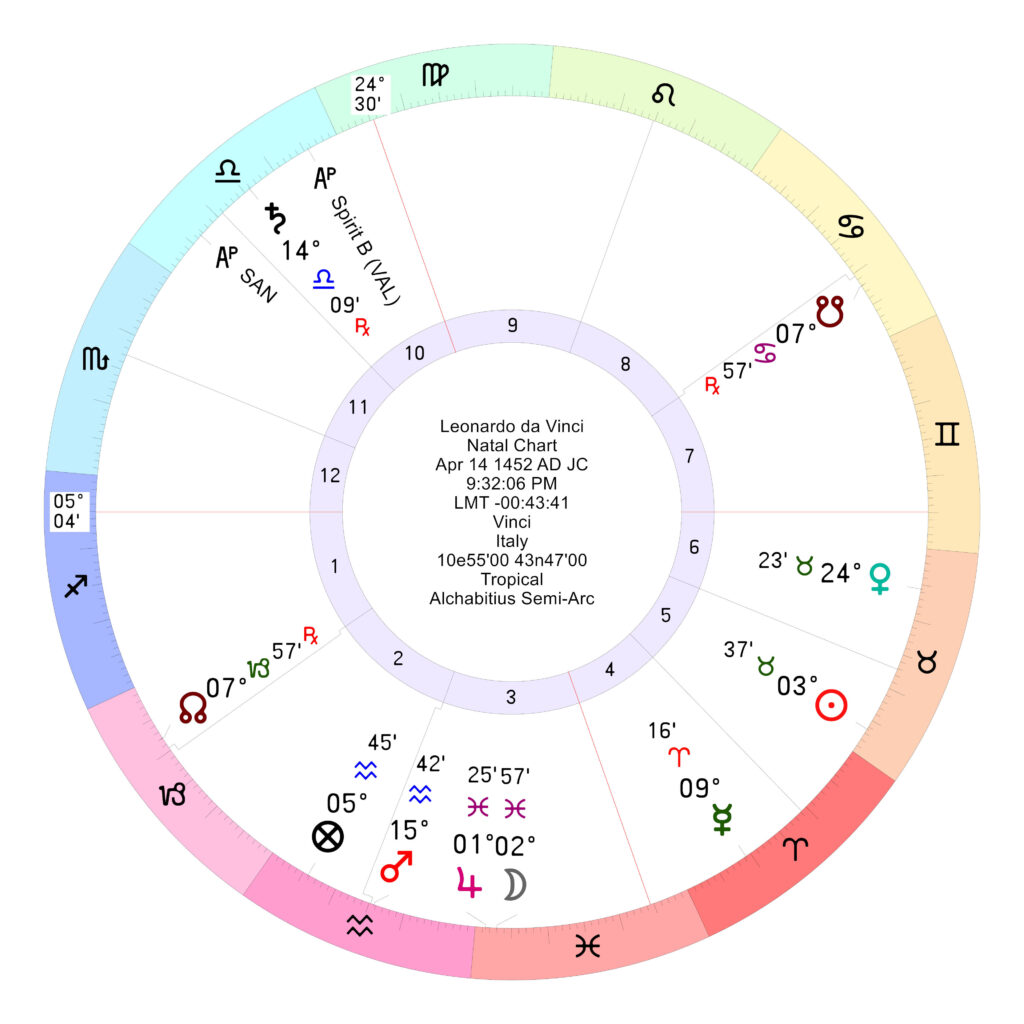
In his birth chart, Sagittarius rises, ruled by Jupiter who is placed in his own sign, Pisces, in the fourth house. Jupiter is joined there by the Moon, which is the in-sect light in this night chart. This conjunction in the house of family, home, and ancestry describes a supportive background and a childhood shaped by the countryside around Vinci. Leonardo’s father came from a line of notaries who moved between the city of Florence and their rural properties, while his grandfather chose to live almost entirely in the country. The Moon with Jupiter in Pisces reflects this blend of legal work, land, and fertile surroundings, and points to the benevolent tone of his early years.
The Sun in Taurus, is in the sixth house, a house that signifies the father’s siblings (3rd from the 4H), represents Leonardo’s uncle Francesco. Only fifteen years older, Francesco became a key figure in Leonardo’s childhood, especially when Ser Piero was away in Florence. Leonardo spent long stretches of time with him in the fields and farms around Vinci, watching the rhythms of agriculture, animals, and village life. These Taurean themes of nature, craft, and steady, hands-on work would feed directly into Leonardo’s later drawings, paintings, and engineering studies. Francesco, like Leonardo’s grandfather, never chased public honours. He stayed rooted in the land, managing the family holdings, and in time left his estate to Leonardo, sealing the bond suggested by the Sun’s place in the chart.
Saturn in Libra in the eleventh house describes Leonardo’s teachers, workshop companions, and the formal circles that shaped his craft. Saturn is exalted in Libra and rules Mars in Aquarius, while Saturn itself is ruled by Venus in Taurus in domicile. This links discipline, precision, and hard work (Saturn and Mars) to beauty, proportion, and material craft (Venus in Taurus), all working through groups, guilds, and patrons (eleventh house).
Leonardo’s apprenticeship in Verrocchio’s busy Florentine workshop fits this symbolism. Under a demanding master, he followed a strict routine, learning not only to paint but also to draw, mix pigments, prepare panels, model in clay, and assist on large projects from start to finish. Verrocchio’s tomb slab for Cosimo de’ Medici and the gilded copper orb for Florence Cathedral showed Leonardo how geometry, symmetry, and engineering could be combined in a single, harmonious design.
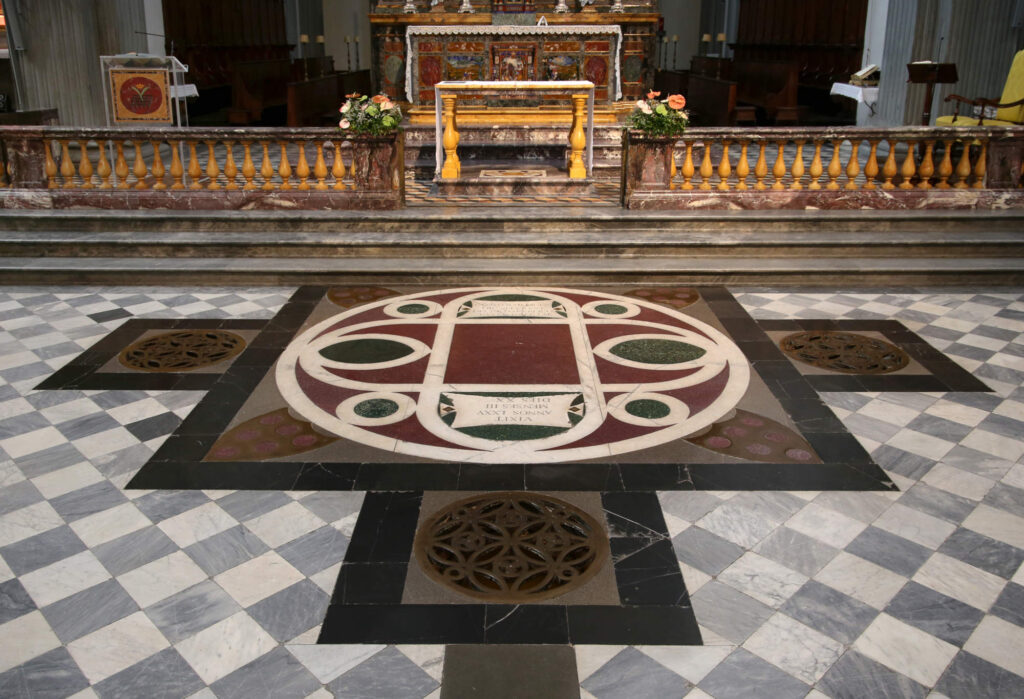
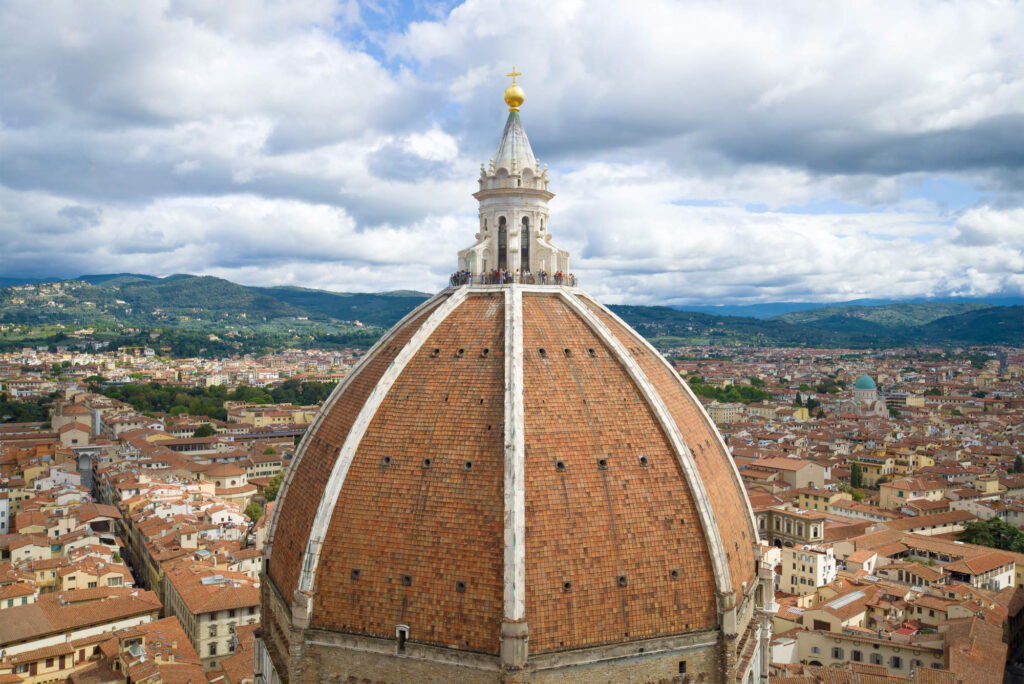
By the early 1470s Leonardo was enrolled as a master in the painters’ Guild of Saint Luke. Saturn in the eleventh shows his public identity as an artist forming within these structured communities. Verrocchio’s studio, Medici commissions, cathedral work, and the guild itself provided the disciplined, cooperative framework that allowed Venus in Taurus and Mars in Aquarius to express themselves through balanced design and inventive technique.
Jupiter in Pisces in the exalted bound of Venus shows Leonardo’s gift for turning observation into luminous, tender beauty. Jupiter is strong in Pisces, a water sign linked to vision, spirit, and flow. In the bound of Venus, this power seeks harmony, subtle color, and soft transitions rather than sharp edges. It is a signature for pictures that feel liquid, atmospheric, and gently enchanted rather than hard or rigid.
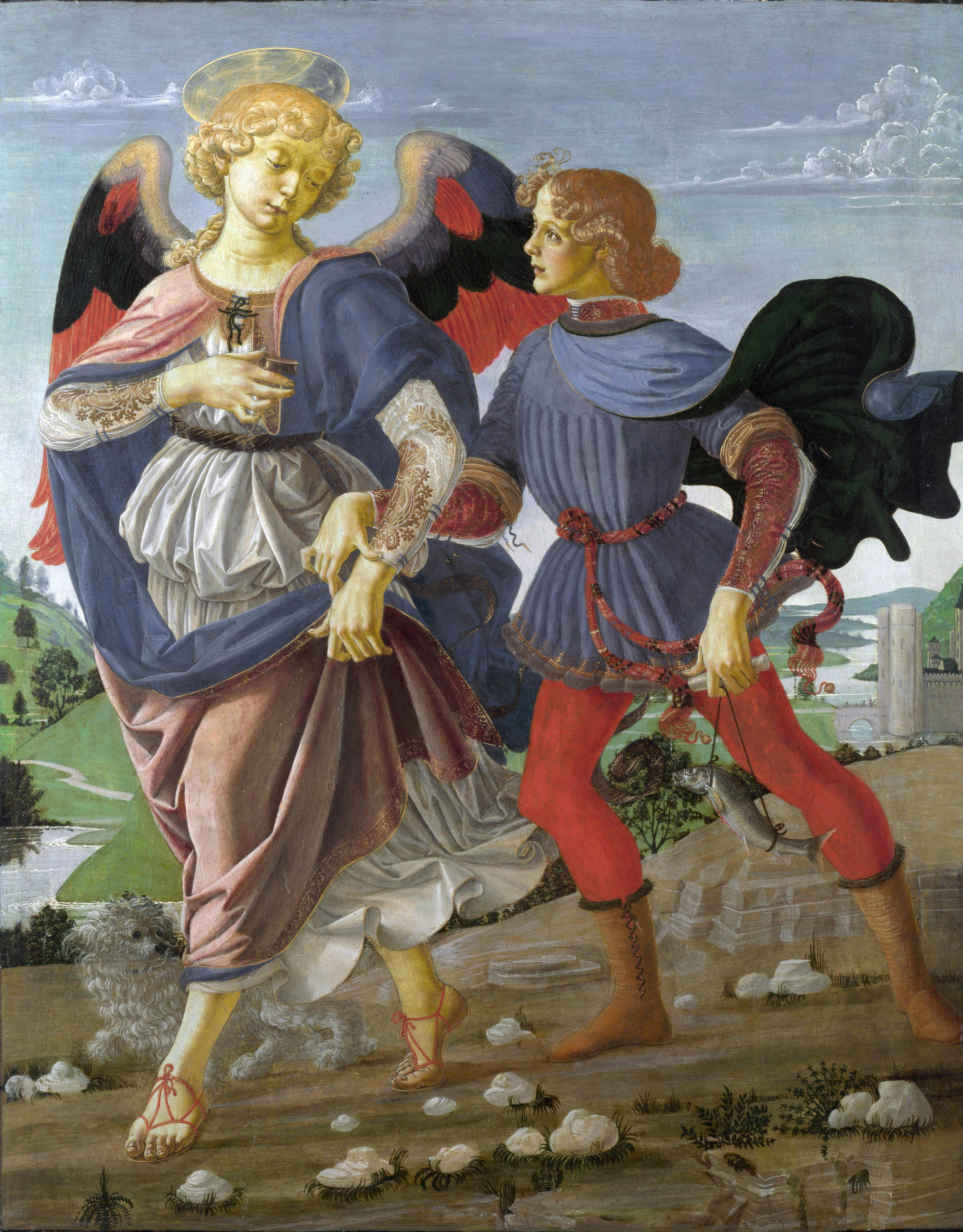
We see this early in Tobias and the Angel, where Leonardo is thought to have painted the fish and the lively little dog. The fish’s scales catch the light like shining armor, each one rendered as if it were a tiny jewel. The glistening eye, the glimmer on the gills, and even the blood from the cut belly show a love of moist, reflective surfaces that is very Pisces–Venus: detailed, sensual, but never crude. The prancing dog, alert and full of personality, adds charm and movement, another sign of Jupiter’s generous, life-filled style working through a delicate Venusian touch.
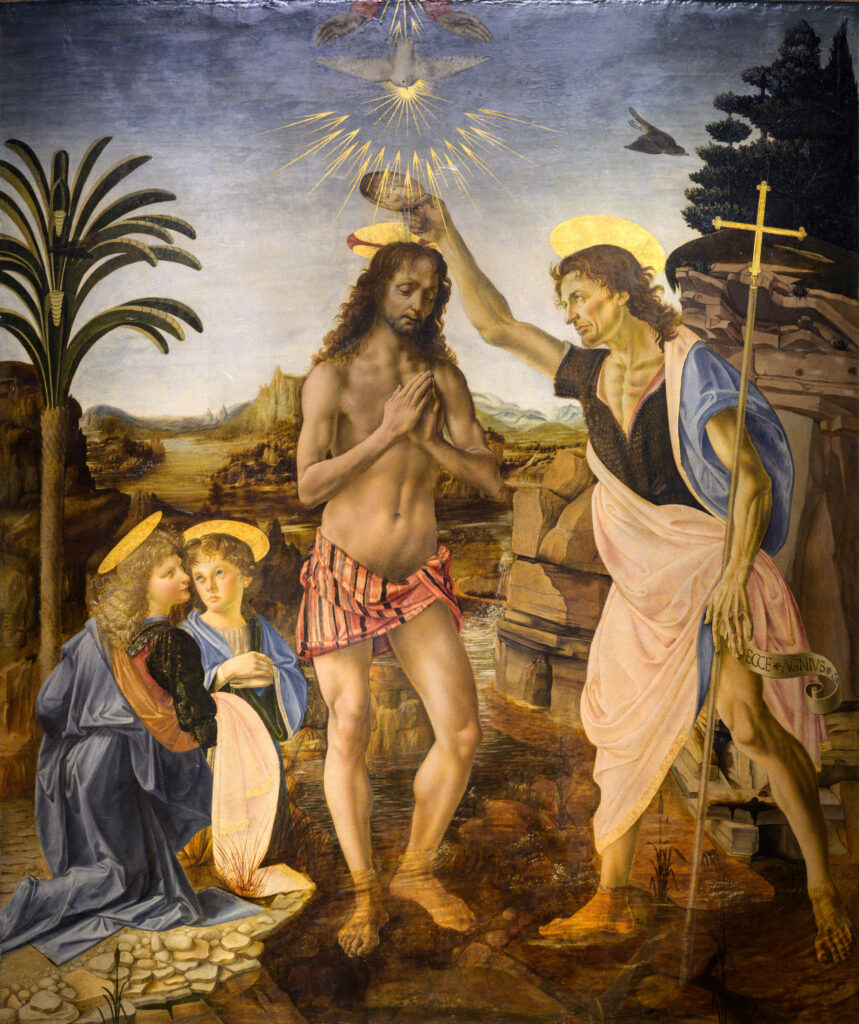
In The Baptism of Christ, Leonardo’s angel and much of the background reveal the same Jupiter-in-Pisces signature. He paints the river as a living presence, with flowing currents, ripples, and soft mist that link heaven, landscape, and figures into one continuous scene. His early experiments with sfumato as a way of letting forms dissolve without hard outlines, give the angel’s face and the distant hills a veiled, dreamlike quality. Jupiter in Pisces in the Venus bound is here in full effect: light and water merge, edges blur, and a simple Gospel story becomes a luminous, flowing vision.
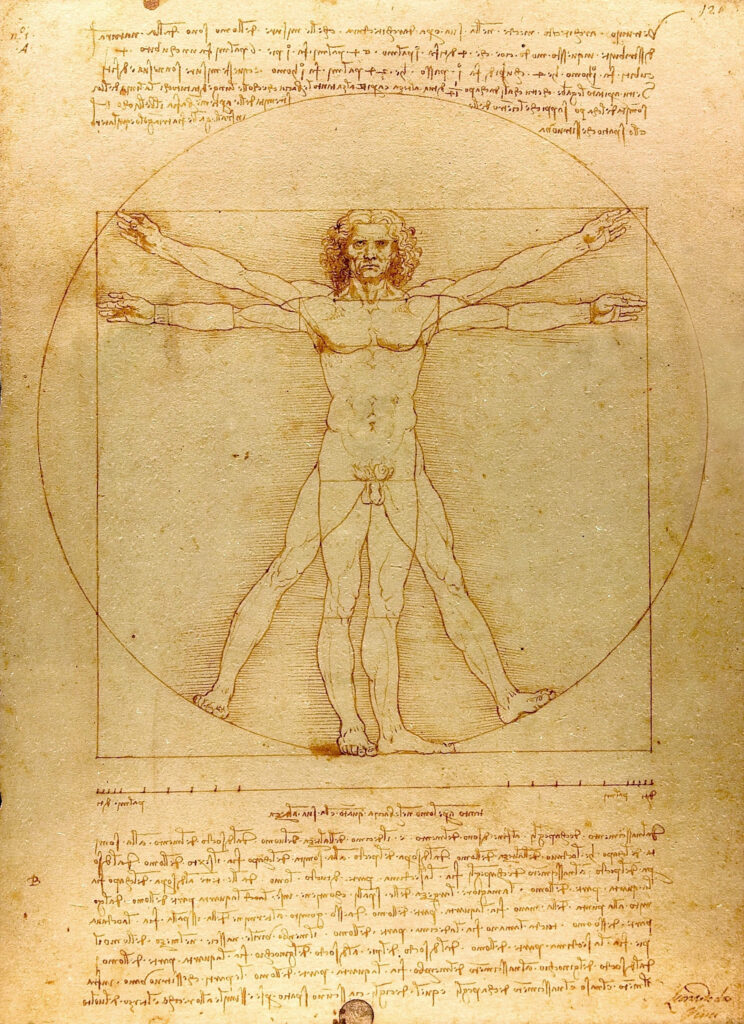
Mars in Aquarius in the third house shows Leonardo’s drive to think like an engineer and strategist rather than only as a painter. Mars gives cutting focus and practical action; Aquarius adds invention, mechanics, and an interest in systems and machines. In his famous letter to Ludovico Sforza, Leonardo barely mentions painting and instead sells himself as a military engineer who can design bridges, siege machines, fortifications, and devices for use on land and water. For long stretches of his life Leonardo saw himself more as an engineer than as an artist, which fits Mars as bound ruler of the Midheaven channeling his career through technical skills and bold, practical ideas.
Placed in the third house, Mars in Aquarius also describes Leonardo’s work with roads, rivers, and local terrain: the infrastructures that connect places. In Milan he helped study and improve the Navigli canal system and designed new lock mechanisms, turning the landscape into a network that could be engineered and controlled. Later, in Florence, he drew ambitious schemes to divert the Arno River away from Pisa, combining knowledge of soil, hydraulics, and military strategy to reshape the environment for political ends. This is Mars acting through Aquarius and the third house: aggressive, technical intervention in routes, channels, and the movement of water.
Mars in Aquarius also appears in Leonardo’s anatomical studies, where cutting (Mars) meets cool, experimental inquiry (Aquarius) and endless sketching and note-taking (third house). Between the late 1480s and early 1500s he dissected around thirty human corpses, recording muscles, bones, organs, and vessels in drawings that treat the body as a finely engineered structure. His notebooks show cross-sections, exploded views, and mechanical analogies, all written in tight mirror script, like technical reports meant for a future reader. Mars in Aquarius in the third house turns the urge to cut, test, and innovate into pages of precise diagrams and ideas, linking his engineering mind to his constant drawing hand.
Mercury in Aries in the fifth house makes Leonardo’s career fiercely creative and spectacular. Mercury rules his Midheaven and is ruled by Mars in Aquarius, so his public life runs through quick ideas, bold experiments, and engineered displays of motion. At the Sforza court he was prized not only as a painter but as a designer of festivals and stage machinery, most famously the Festa del Paradiso in 1490, where he devised moving “heavens” with mechanical devices to create a living celestial sphere above the stage. The same Mercury–Mars combination lies behind his later automaton projects, such as self-propelled carts and mechanical creatures, which turn theatre, play, and engineering into a single art.
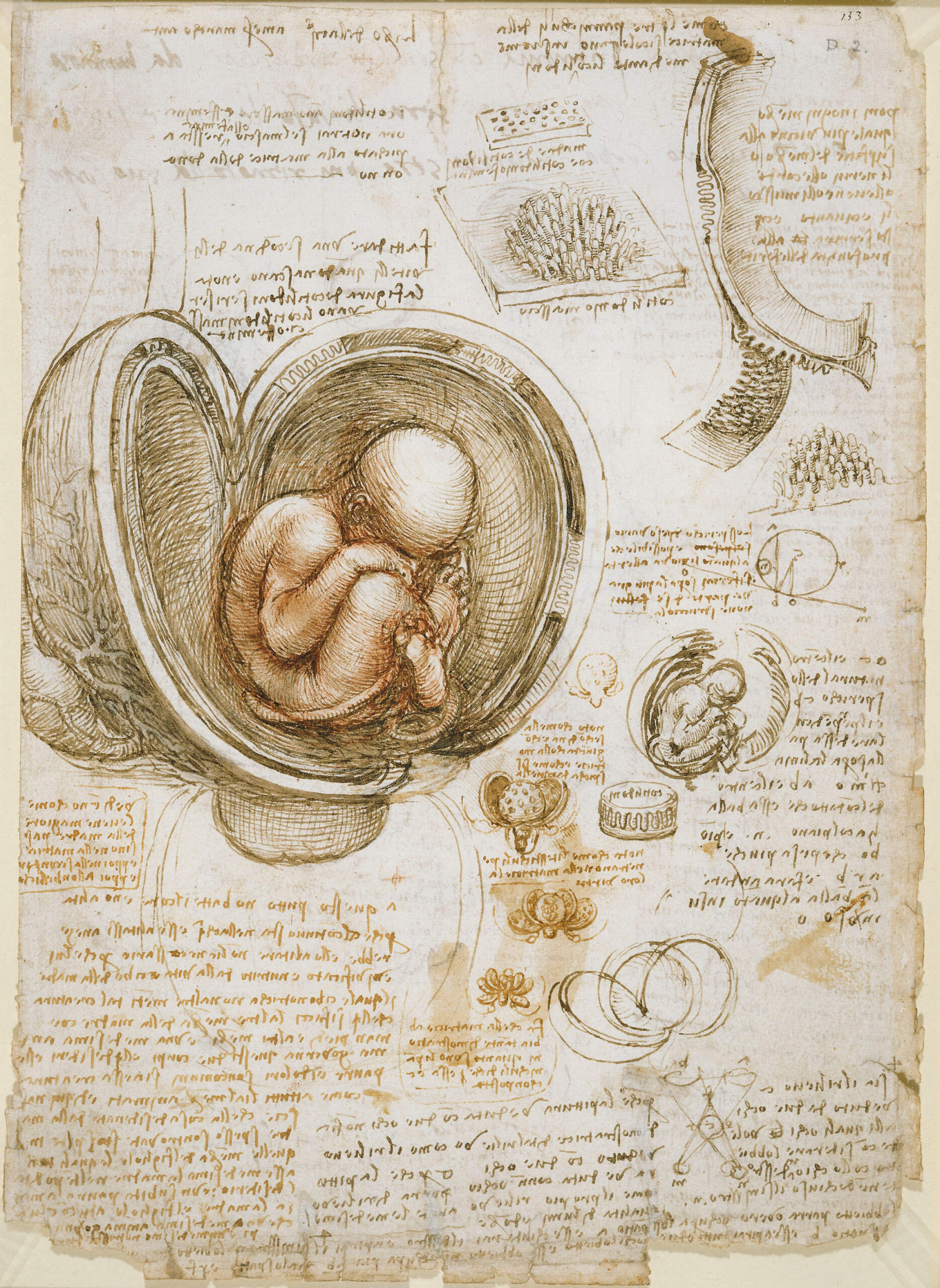
The fifth house also shows what is said about a person after death, and Mercury here points to Leonardo’s notebooks as the main source of his posthumous reputation. Around 5,000 to 7,000 pages survive, scattered in codices like the Arundel and the Leicester (formerly Hammer), filled with mirror-written notes and sketches on water, machines, anatomy, plants, and the movement of light. A famous example is his marginal note, “Describe the tongue of the woodpecker,” a small glimpse of the sharp, playful curiosity that runs through these pages. Mercury in Aries in the fifth leaves him remembered as the restless, inventive mind whose sketches and scribbles — more than any single finished work — keep his genius alive on the page.
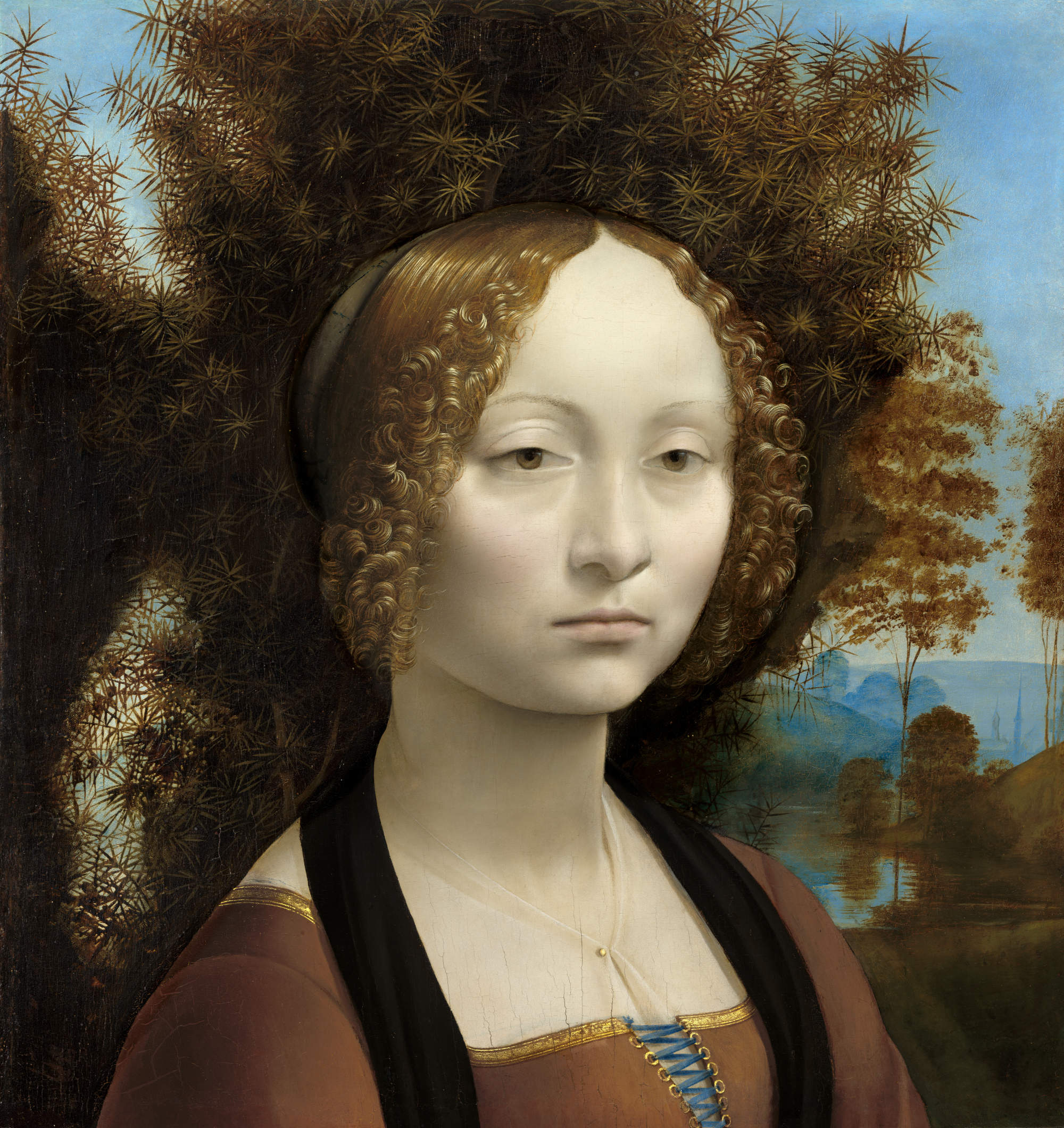
Venus in Taurus in the sixth house shows Leonardo’s love of beauty grounded in steady work, craft, and artistic toil. Venus is in its own sign but placed in the bound of Saturn, while Saturn itself is exalted in Libra in the eleventh house and retrograde. The two are in mutual generosity: Saturn in Venus sign, Venus in a Saturn bound, linking pleasure and proportion (Venus) with discipline and group projects (Saturn in the house of workshops, patrons, and collaborators). The tone is calm, earthy, and sensual, yet held in by a quiet seriousness that you can already feel in Ginevra de’ Benci, where the three-quarter pose and direct gaze were bold innovations for a young woman’s portrait, but the mood is cool, reserved, almost severe. Her flawless skin, the dark juniper, and the muted landscape along with the austerity of her expression and the tight framing speak of Venus placed in the bound of Saturn/Taurus.
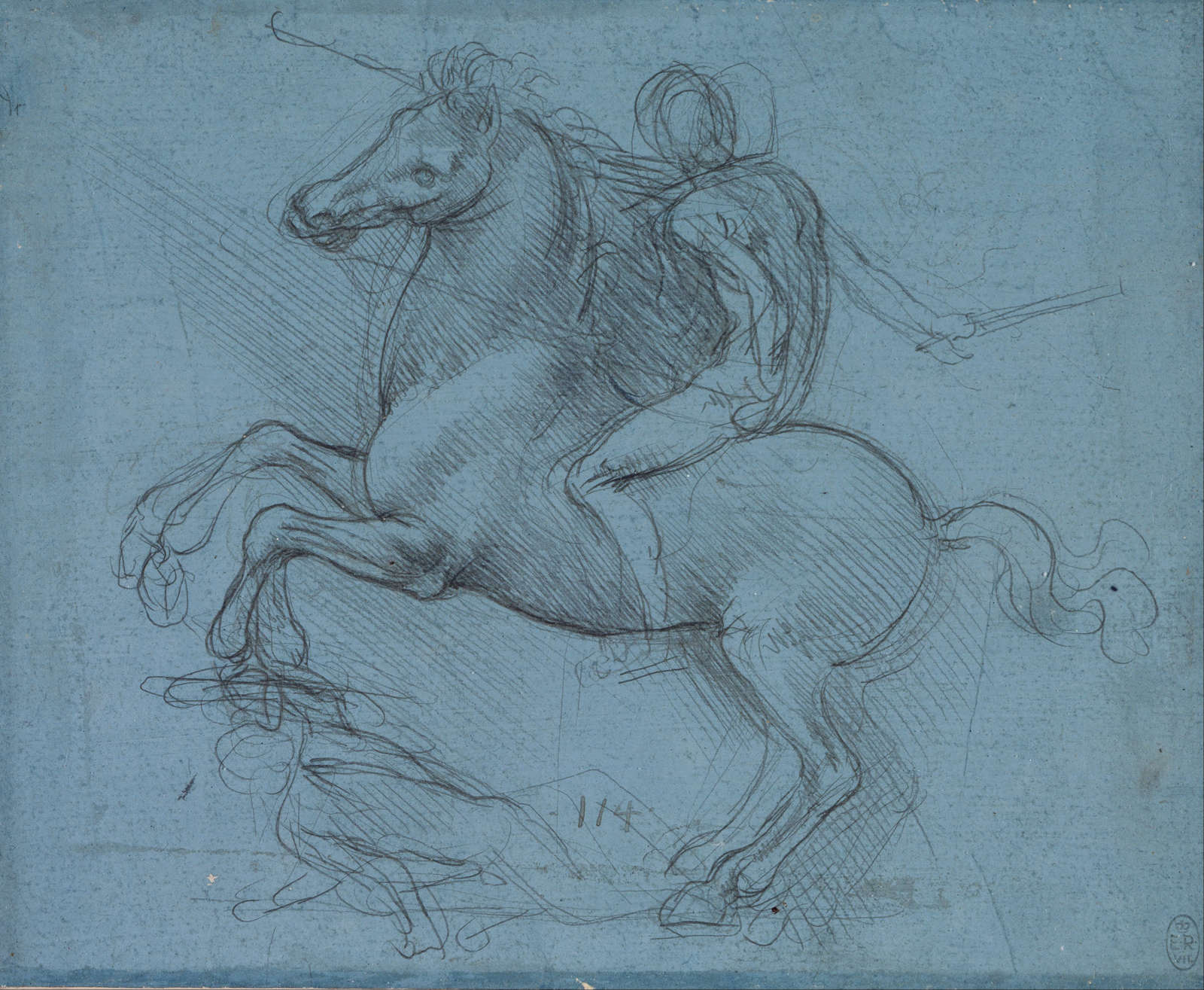
This Venus–Saturn combination, with Saturn retrograde, appears in Leonardo’s long, frustrated labor on the Sforza horse. He spent years drawing horses, studying their anatomy, and designing an ambitious one-pour casting method for a colossal bronze monument, only to see the bronze melted into cannons and the great clay model destroyed when the French took Milan. The exalted Saturn in Libra promises a masterpiece created with high standards and careful planning, but being retrograde in the eleventh house shows delays, reversals, and projects bound up with the changing fortunes of powerful patrons. Leonardo keeps returning to the task, refining and preparing, yet the work never reaches its final, solid form.
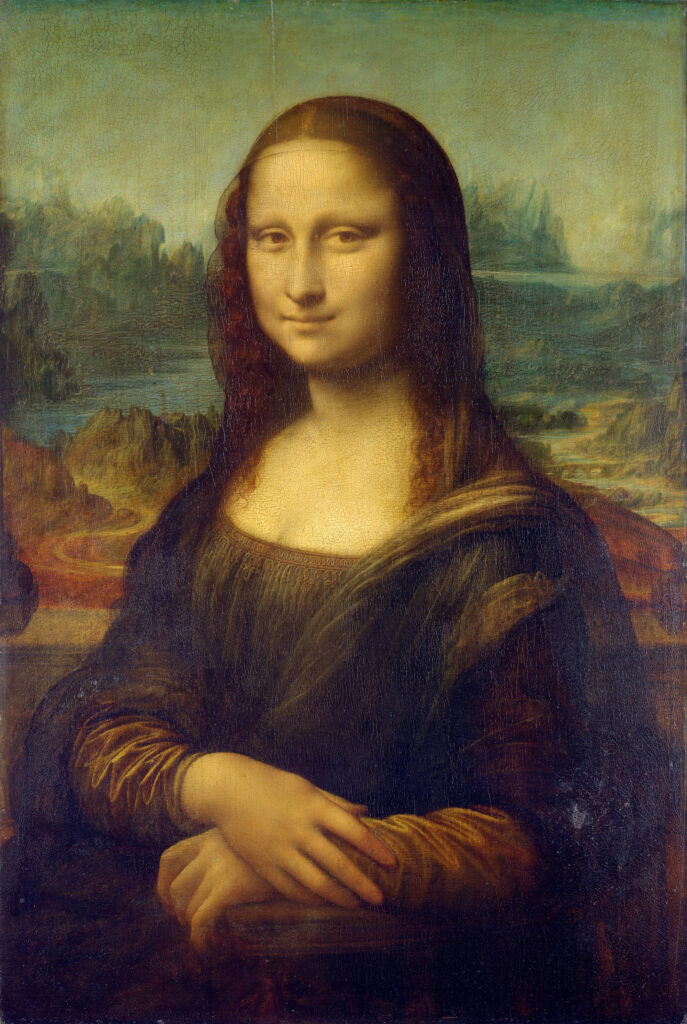
The same Saturn–Venus pattern is refined, rather than broken, in the Mona Lisa. Here Venus in Taurus shows in the subject herself — a silk merchant’s wife, seated in simple dignity — and in the soft, earthy palette and tender handling of skin, hair, and hands. Saturn’s bound appear in the painstaking process behind that apparent ease: Leonardo’s late-night dissections at Santa Maria Nuova, his analysis of the muscles and nerves of the face, his notes on how a smile begins to form, and his studies of how the eye sees light and shadow. He worked on the painting, on and off, for well over a decade and carried it with him from Florence to Milan and then to France, always adjusting, softening, and perfecting the sfumato around the eyes and lips. Venus gives the smile; the bound of Saturn insists that the smile be earned through years of disciplined study. Retrograde Saturn does not allow him to declare it finished easily; it drives him back over the same ground in search of a more perfect smile, a more subtle veil of light.
Seen in the whole chart, Venus in Taurus in Saturn’s bound and Saturn exalted but retrograde in Libra in the eleventh house complete Leonardo’s story. Jupiter in Pisces gives a generous, imaginative early life; Mars in Aquarius and Mercury in Aries push him toward bold experiments in machines, theatre, anatomy and drawing; Venus and Saturn together insist that all this brilliance be tested, corrected, and refined through long service, demanding patrons, and repeated efforts. The result is a life where beauty is never casual or quick. Every portrait, every study of water or flesh or light, is the outcome of patience and delay — Venus in her own sign working through an exalted, retrograde Saturn, until art, discipline, and the search for perfection become one and the same.